

Categories
What to Know Before Branding Hi-Vis and PPE
Yes, hi-vis and PPE can be branded but the logo mustn’t compromise the garment’s certified protection or visibility. Keep branding clear of the reflective tape, don’t cover too much fluorescent fabric, and match the method to the material. Get those three right and the garment keeps its EN ISO 20471 class and certification.
But branding safety equipment isn’t the same as adding a logo to an ordinary polo shirt. Because the garment still has to provide the protection and visibility it was certified for, the logo’s size, position and the method used all matter more than they would on standard workwear.
This is particularly important with hi-vis clothing, where covering too much fluorescent material can affect the garment’s EN ISO 20471 rating. The wrong branding method can cause problems too, especially when you’re dealing with waterproof membranes, flame-resistant fabrics and reflective tape.
Five things to confirm before you order branded hi-vis or PPE for your team:
- The garment will remain compliant after branding. Adding your logo shouldn’t compromise its certified protection or hi-vis class.
- The logo is kept off the reflective tape. Reflective bands need to remain unobstructed to do their job.
- The branding method suits the garment. Printing may be better for lightweight or waterproof hi-vis, whereas embroidery can suit heavier garments.
- Enough certified area remains visible. Large logos can cover fluorescent material and potentially reduce a hi-vis garment’s rating.
- There aren’t additional rules for your industry. Some sectors have their own requirements, including specific standards and hi-vis colours.
We’ll look at each of these points in more detail, including how branding can affect hi-vis compliance, where logos can safely be positioned and what to ask your supplier before placing an order.
Why Hi-Vis and PPE Branding Needs a Different Approach
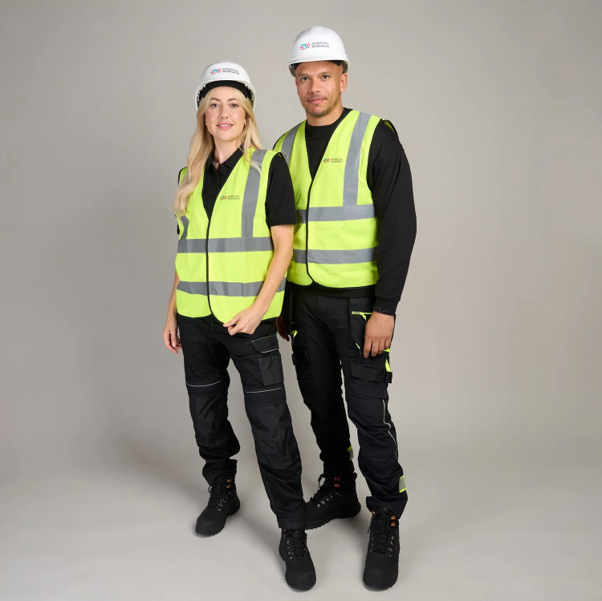
Hi-vis and PPE need a different approach to branding because you’re customising safety equipment, not simply adding a logo to a uniform. The finished garment still has to do the job it was chosen for after it’s been printed or embroidered.
With a standard polo or sweatshirt, we have much more freedom to work around the logo. We can look at where it sits well and whether print or embroidery gives the finish you want. With PPE, those decisions happen the other way around. We look at the garment first, then work out what branding it can safely accommodate without compromise.
On branded hi-vis, we have to consider the fluorescent area and reflective tape before deciding how large a logo can be or where it should go. Waterproof and specialist protective fabrics bring their own considerations too. Sometimes that means recommending a different branding method or adjusting the position you originally had in mind.
If you’re unsure whether the clothing you’re ordering actually counts as PPE, our guide to whether uniforms are considered PPE explains the distinction in more detail. We also have an entire guide on flame retardant clothing standards if that’s what you’re after.
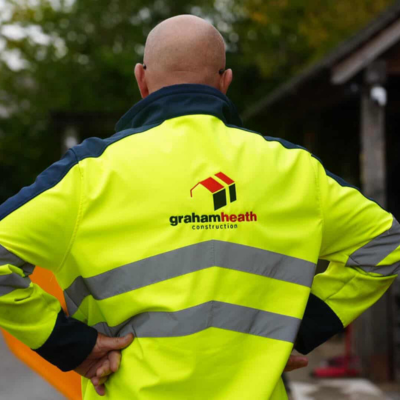
Case Study:
When Graham Heath Construction were looking for a dependable workwear supplier, they started with us on a small two-jacket order and it grew from there.
We now kit out their whole team with branded hi-vis garments built for the demands of on-site construction work, alongside durable PPE and smart branded workwear that represents the company head to toe. Read our case study to see how we took Graham Heath Construction from two jackets to a full team rollout.
The UK PPE Rules You Need to Know Before Branding
In the UK, the basic rule is that employers need to provide suitable hi-vis PPE where it’s required, and the products they buy need to meet the relevant safety requirements. Branding doesn’t change those responsibilities. If you add a logo, the finished PPE still needs to be suitable for the job.
Employer responsibilities for PPE
The Personal Protective Equipment at Work Regulations 1992 cover an employer’s duties around providing and using PPE. Since 6 April 2022, those duties have also applied to limb (b) workers (e.g., contractors, casual workers, gig-economy workers) under the Personal Protective Equipment at Work (Amendment) Regulations 2022.
From a workwear buyer’s point of view, the practical part is fairly straightforward. Choose PPE for the risk first and think about branding second. A jacket shouldn’t be selected because it gives you the biggest space for a company logo if another garment is better suited to the protection your team needs.
PPE certification and marking
There are separate rules covering the PPE products supplied in Great Britain. Regulation (EU) 2016/425, as retained in UK law, sets the product requirements, with enforcement through the Personal Protective Equipment (Enforcement) Regulations 2018.
For hi-vis clothing, EN ISO 20471 is the standard you’ll see most often. Compliant PPE supplied on the GB market can carry either a UKCA or CE mark.
It’s worth mentioning CE marking because there’s still outdated advice online saying businesses should now be looking for UKCA only. That’s not the case: CE marking continues to be recognised in Great Britain.
For branded PPE, however, the mark on the original garment isn’t the end of the conversation. You also need to consider what happens when you put your logo on it. With hi-vis in particular, that means looking at how much fluorescent and reflective material remains visible once the branding is in place.
EN ISO 20471 and Branded Hi-Vis: The Basics
EN ISO 20471 is the standard for high-visibility clothing, with garments classified according to the amount of fluorescent and reflective material they provide.
Hi-vis is rated Class 1, 2 or 3, with Class 3 providing the highest level of visibility. We won’t go into the individual requirements here, as they’re covered in our dedicated guides to EN ISO 20471 standards and the classes of high-visibility clothing.
What matters when you’re branding hi-vis is what happens to that certified area once the logo goes on. Covering fluorescent material reduces the amount left visible, and the reflective tape needs to remain unobstructed. That means the size and position of your branding can have a direct bearing on whether the finished garment retains its original class.
So, if you’re starting with a Class 3 jacket, don’t assume the Class 3 label gives you free rein to brand it however you like. The finished garment is what needs to be considered.
Can Branding Affect a Hi-Vis Rating?
Branding can affect a hi-vis rating if the logo covers too much of the material the garment needs to meet its EN ISO 20471 class. Logo size and placement aren’t just design decisions on hi-vis; they directly affect the compliance of the finished garment.
Logos reduce the visible fluorescent area
A small chest logo and a large company name printed across the back don’t have the same impact. A logo that covers fluorescent fabric reduces the garment’s visible certified area, so an oversized back print can potentially lower its EN ISO 20471 class.
What our experts say:
“One of the biggest things we look at with hi-vis is how much space the logo is actually taking up. A large back print might work perfectly well on one jacket and be too much on another because the reflective tape and available fluorescent area are different. We’d much rather resize or reposition the artwork than force a logo into a space where it could affect the garment’s rating.” – Louis Georgiou, Operations Director
There’s no universal maximum logo size we can give you in centimetres. Different garments have different designs and different amounts of usable space, so we look at the individual product and the proposed hi-vis and PPE branding together for our clients. If a logo is too large for the available area, reducing its size or moving it may be all that’s needed.
Case Study:
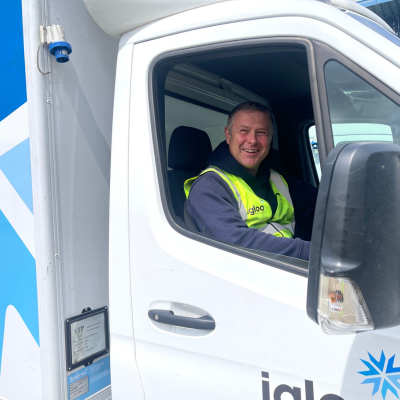
When Igloo Thermo Logistics needed a new uniform provider, they came to us.
We supplied their team with branded hi-vis wear built for the warehouse floor and delivery routes, alongside a full range of branded workwear, T-shirts, hoodies and softshells — each embroidered with the Igloo logo on the left chest.
Keep branding away from reflective tape
Reflective tape is much simpler: don’t brand over it. Printing or applying a transfer over the tape masks the reflective surface, while embroidering through it can physically damage it.
That can sometimes restrict where a logo will fit, particularly on garments with reflective bands running across the chest and back. Rather than squeezing branding into an unsuitable space, it’s better to adjust the size or position. For larger branded hi-vis orders, we recommend having the proposed artwork and placement checked against the garment before production. What works perfectly well on one hi-vis jacket won’t necessarily work on another, and we’ll be able to help you get the balance right.
Which Branding Method Should You Use for Hi-Vis and PPE?
The right branding method for hi-vis and PPE depends on the garment. In our experience, lightweight and waterproof hi-vis is better suited to print, whereas embroidery tends to work better on heavier garments. Specialist PPE, particularly flame-resistant clothing, needs to be treated differently again.
| Garment type | Recommended branding method | Why |
| Hi-vis vests and lightweight hi-vis T-shirts | Works well on lightweight fabrics without adding embroidery stitches to the garment | |
| Waterproof or membrane hi-vis | Print or suitable transfer | Embroidery needles can puncture the waterproof membrane |
| Heavyweight hi-vis jackets and sweatshirts | Embroidery | Heavier fabrics can often accommodate embroidery well |
| Flame-resistant clothing | Flame-resistant print | Specialist flame-resistant print is required to keep the garment to the flame-resistant standards |
| Fleece | Embroidery | The recommended branding method for knitted garments |
| Safety footwear and safety glasses | Not suitable for branding | These products cannot be branded |
There are practical reasons behind those hi-vis and PPE branding choices. Take a waterproof hi-vis jacket. Every embroidery stitch puts a needle through the fabric. If there’s a waterproof membrane underneath, you’ve just made hundreds of tiny perforations in something that’s supposed to keep water out. A printed logo avoids that problem.
What our experts say:
“Customers sometimes come to us knowing they want embroidery because they like the finish, but it isn’t always the right choice for the garment. A waterproof jacket is a good example — putting hundreds of needle holes through a membrane doesn’t make much sense when keeping water out is the reason you bought it. We look at the fabric and what the garment needs to do first, then recommend the branding method.” – Louis Georgiou, Operations Director
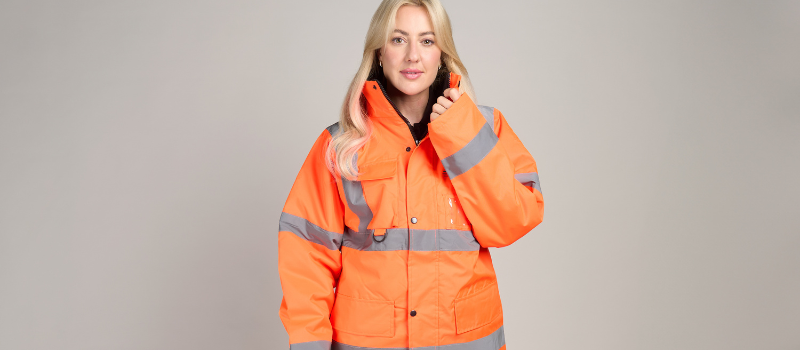
On the other hand, fluorescent polyester is sensitive to high temperatures, so heat-applied transfers and some DTF applications need to be handled carefully to avoid scorching or dulling the fabric. Flame-resistant PPE is more specialist again, because the decoration method can’t be allowed to compromise its FR performance.
And regardless of the method, we never recommend branding over reflective tape. Print can cover the reflective surface and embroidery can damage it, so the artwork needs to work around the garment rather than through it.
If you’re deciding between different decoration methods, our guide to embroidery vs printing vs DTF goes into the pros and cons of each.
Where Can You Put a Logo on Hi-Vis Clothing?
Logos can usually be added to the chest or back of hi-vis clothing, as long as the position keeps the branding clear of the reflective tape and leaves enough fluorescent material visible. There isn’t one standard logo position that works for every hi-vis garment, so placement needs to be checked against the individual product.
The left chest is usually the easiest place to work with because company logos tend to be relatively small there. Upper-back branding is common too, particularly when workers need to be easily identified from a distance. The available space will depend on where the reflective bands sit on that particular jacket or vest.
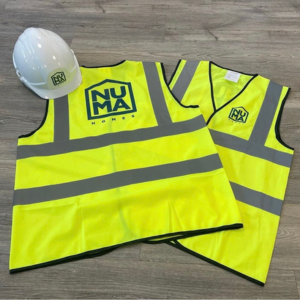
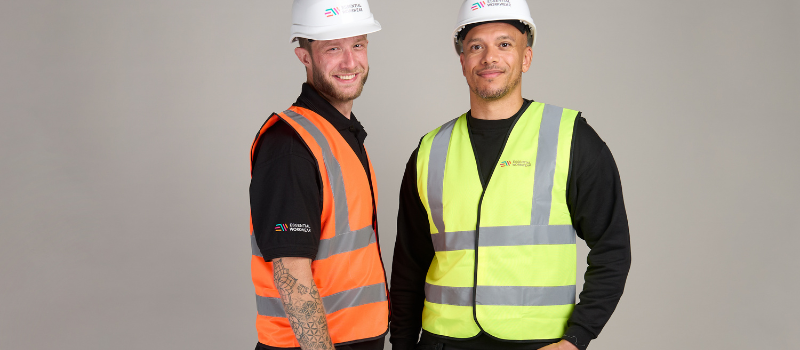
For this customer, we provided branded hi-vis vests and hard hats so their employees can stay safe on site.
Back logos are where we’d pay closer attention to size. Customers understandably want their company name to be easy to read, but making the artwork bigger means covering considerably more fluorescent material. Sometimes the better option is to reduce the logo slightly or reposition it rather than trying to fill all the available space.
Some garments also have contrast or combined material around areas such as the shoulders or hem that may offer another branding position. Again, we’d look at the actual garment before recommending the best logo placement.
The rule we work to is simple: keep logos off the reflective tape and don’t sacrifice the certified visible area just to make the branding larger. If the usual logo position doesn’t work on a particular garment, change the branding rather than compromise the PPE.
For advice on positioning logos across the rest of your uniform, see our Workwear Logo Placement Guide for inspiration.
Industry and Colour Rules to Check Before Ordering Branded Hi-Vis
Some industries have their own hi-vis requirements on top of EN ISO 20471, and in some jobs, you won’t have complete freedom over the colour or specification of the hi-vis you order.
Hi-vis for the rail industry
Rail is the obvious example. UK rail work requires orange hi-vis that meets RIS-3279-TOM, rather than standard yellow hi-vis. If you’re ordering branded workwear for a rail team, that requirement narrows down the suitable garments before we even start looking at where your logo can go.
When you need PPE, don’t just ask for 20 branded hi-vis jackets; tell us if they’re for rail work, construction, warehouse staff or whatever environment your team will actually be working in. That context can change which products we recommend.
What about other hi-vis colours?
You’ll see plenty of other brightly coloured hi-vis-style clothing, particularly at events where different colours can make stewards and security staff easier to identify. That doesn’t necessarily make those garments certified high-visibility PPE.
Where certified hi-vis is required, colour isn’t simply a branding choice. The garment needs to meet the requirements for the job, and a brightly coloured vest shouldn’t be used as a substitute just because it makes the wearer easy to spot or goes with your branding.
So, choose hi-vis for the working environment first, then brand the suitable garment. It’s a much better starting point than choosing a colour to match your company branding and trying to make the safety requirements fit afterwards.
What Should You Ask a Supplier Before Branding PPE?
We want to confirm that the logo, its position and the branding method are suitable for the garment you’ve chosen. And ideally, we want that conversation before production starts, not after hundreds of jackets have already been printed or embroidered.
If you’re comparing workwear branding platforms for your hi-vis gear, here are a few questions to ask:
- Will the garment still meet its certified class after our logo is added? The supplier should consider how much certified material will remain visible once the branding is in place.
- Has the logo placement been checked? It should be positioned away from the reflective tape and sized appropriately for the individual garment.
- Which branding method will you use? Ask why that method is suitable for the fabric, particularly with waterproof, flame-resistant or fluorescent garments.
- Will the certification label remain intact and visible? Branding shouldn’t cover or interfere with the information you need to identify the PPE and its certification.
- Can you provide the garment’s certification or declaration of conformity? This gives you evidence of the standards the original product has been assessed against.
At Essential Workwear, we do our workwear branding in-house. That gives us control over the process and, more importantly, means we can look at the garment and artwork together before recommending how it should be decorated. If the logo needs moving, reducing in size or applying using a different method, we’d rather flag that at the artwork stage than compromise the PPE to accommodate your branding.
How to Keep Branded PPE Compliant After It’s Issued
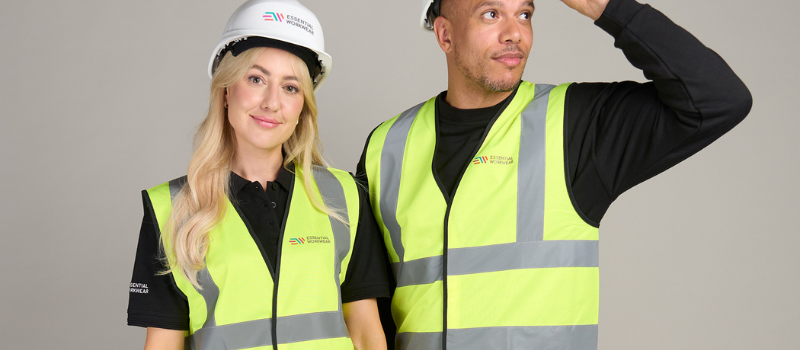
Branded PPE, like hard hats, needs to be checked throughout its working life, just unbranded PPE. For hi-vis, check the fluorescent fabric, reflective tape and branding for signs of wear, and replace the garment when it can no longer provide the visibility or protection required.
Pay attention to fading, ingrained dirt and damaged or peeling reflective tape. And remember, a jacket can still look perfectly wearable while no longer performing as you’d expect from hi-vis PPE. Check it in low light conditions to see if the reflection holds up and plan a hi-vis refresh if necessary.
Washing also takes its toll. There’s no universal wash limit for hi-vis, so check the care label for the maximum number of cycles and follow the manufacturer’s washing instructions.
Our branding at Essential Workwear is built to last, so you’ll likely see wear and tear signs on the garment itself before you ever spot an issue with the branding peeling or fading.
Common Mistakes When Branding Hi-Vis and PPE
The most common mistakes when branding hi-vis and PPE come from treating it like ordinary workwear. Logo size, placement, and decoration method all need to work around the garment’s protective features and certification.
Watch out for:
- Going too big with the logo: Large prints can cover enough fluorescent material to affect the garment’s EN ISO 20471 class.
- Branding over reflective tape: Keep print, transfers and embroidery completely clear of reflective bands.
- Embroidering waterproof PPE: The needle can puncture the membrane you’ve paid for to keep the wearer dry.
- Using the wrong method on FR clothing: Branding mustn’t compromise the garment’s flame-resistant performance.
- Assuming all PPE can be personalised: Safety footwear and safety glasses, for example, can’t be branded.
- Ignoring the care label: Washing and wear affect hi-vis performance, so follow the instructions for the individual garment.
Order Branded Hi-Vis and PPE With Confidence
Getting branded PPE right takes more than choosing a compliant garment and sending over your logo. You need to know how that particular garment can be branded without interfering with the protection it’s there to provide.
That’s where our experience comes in. At Essential Workwear, we supply certified hi-vis clothing and PPE, with branding carried out in our own in-house factory. Our team understands the practical differences between decorating a lightweight hi-vis vest and specialist protective clothing, so we can advise on the right branding method, logo size and placement for the garment you’re ordering.
If you’re unsure what kind of PPE is right for your team, talk to our team about what you’re looking for. For businesses managing larger or repeat workwear orders, our corporate accounts portal can help make ongoing ordering much easier too.
FAQs About Branding Hi-Vis and PPE
Can you put a logo on hi-vis clothing?
Yes, hi-vis clothing can be branded with a company logo without affecting compliance when it’s done correctly. Keep the logo away from reflective tape and make sure its size doesn’t cover too much of the fluorescent material needed for the garment’s EN ISO 20471 class.
Can a logo be added to a Class 3 jacket without affecting its rating?
Yes, you can brand a Class 3 hi-vis jacket and retain its rating, provided enough of the required fluorescent and reflective material remains exposed. This is why we check the proposed logo size and position against the garment rather than assuming the same artwork will work on every Class 3 jacket.
Does adding a logo to PPE void its certification?
No, adding a logo doesn’t automatically void PPE certification. Problems arise when the branding interferes with the garment’s protective performance, such as covering reflective material or using a decoration method that’s unsuitable for a specialist fabric.
How is branded hi-vis assessed for compliance?
Branded hi-vis still needs to provide the fluorescent and retroreflective areas required for its EN ISO 20471 class. The finished garment is what matters, so the amount of material covered by the logo and its position need to be considered before production.
Can hi-vis be embroidered or does it have to be printed?
Hi-vis can be printed or embroidered, depending on the garment. We typically recommend print for lightweight and waterproof hi-vis, as embroidery can puncture waterproof membranes. Heavier jackets and sweatshirts can often take embroidery, while flame-resistant garments need a method that won’t compromise their FR performance. We can recommend the best option if you’re unsure.
Why do rail workers wear orange hi-vis instead of yellow?
UK rail workers wear orange hi-vis because clothing used for applicable rail work needs to meet RIS-3279-TOM requirements. Standard yellow hi-vis shouldn’t be substituted where this rail-specific requirement applies.
How often should branded hi-vis be replaced?
Replace branded hi-vis when fading, damage, wear or repeated washing means it no longer provides the visibility required. There’s no single replacement interval for every garment, so check its condition regularly and follow any maximum wash-cycle information on the care label.