

Categories
How Many Uniforms Does an Employer Have to Provide? (UK Law & Best Practices)
If you’re an employer in the UK, one of the most common questions when onboarding new staff is: “How many uniforms should I give them?” While the answer might seem simple, it involves a mix of UK employment law, Health and Safety regulations (PPE), and National Minimum Wage (NMW) compliance. Providing too few can lead to hygiene issues and low morale; providing too many can bloat your overheads.
Uniform rules in the workplace serve several purposes, from establishing a cohesive brand image to promoting professionalism and safety. As an employer, it’s crucial to understand the obligations and legalities surrounding employee uniforms. As a staff member, it is important to be aware of dress regulations and uniform requirements that come with your contract of employment.
In this guide, we’re tackling everything you’ve ever wondered about workwear, from how many uniforms an employer should provide the right to appeal dress codes, legal obligations, potential costs, and even style tips to keep your wardrobe sharp and work-ready. If you’re also reviewing what’s current in branded apparel, our top workwear trends for 2026 is worth a read alongside this guide.
Let’s get started!
Quick Summary: The “Rule of Three”
There is no single UK law that dictates a specific number of uniforms. however, the industry standard for full-time employees is three sets:
-
One to wear
-
One in the wash
-
One ready for the next shift
If you’re outfitting a team from scratch, our workwear bundles and deals are built around this exact 3-set rotation, with discounts that scale as your order grows.
Why Provide Uniforms as an Employer?
Providing uniforms to employees offers numerous benefits for employers beyond the surface level of creating a unified and professional image. Here’s why employers should consider implementing a uniform policy:
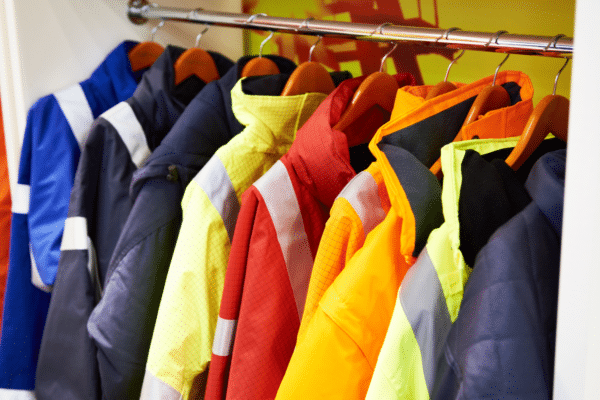
- Branding and Identity: Uniforms featuring an organisation’s brand identity serve as a powerful branding tool, instantly identifying employees as representatives of the company. This might be as simple as a plain t-shirt in the brand’s colours or fully branded polo shirts that clearly identify staff as employees.
- Professionalism and Credibility: Uniforms project an air of professionalism and competence, instilling confidence in customers.
- Employee Unity and Team Spirit: Branded workwear fosters a sense of unity among employees, eliminating social hierarchies based on clothing choices and promoting a sense of equality.
- Safety and Security: In industries where safety is critical, uniforms may include requirements like tying hair, banning jewellery, incorporating personal protective equipment, high-visibility workwear, fire-resistant fabrics, or other safety features that protect from hazardous substances and mitigate potential hazards. If hi-vis is a requirement for your team, our guide to the classes of high-visibility clothing explains which level of protection suits different working environments.
- Efficiency and Time-Saving: Uniforms eliminate the need for employees to spend time and effort selecting appropriate work attire each day. This streamlines the morning routine, reduces decision fatigue, and allows employees to focus their energy on their core job responsibilities.
- Customer Service and Recognition: Uniformed employees are easily identifiable, making it simpler for customers to seek assistance when needed.
- Equal Treatment and Fairness: Uniforms help promote fairness by standardising dress codes and reducing bias. Employers must ensure these policies don’t discriminate against any of the nine protected characteristics under the Equality Act 2010.
How Many Uniforms Does an Employer Have to Provide?
There’s no exact rule in UK employment law stating a fixed number of uniforms employers must provide. However, the number typically depends on the employee’s role, working conditions, and how often the uniform needs to be washed or replaced.

As a best practice:
- Use the rule of three: one to wear, one in the wash, and one ready for the next shift.
- For roles involving heavy-duty tasks or hygiene requirements, three or more may be appropriate.
- For workwear in physically demanding or outdoor roles, choosing durable, well-made garments reduces how often replacements are needed. Our guide to workwear fabric weights (GSM) is a useful starting point if you’re unsure which fabric will hold up best for your team.
Uniform Policy and Guidelines
A well-structured uniform policy is essential for any organisation, as it helps to maintain a professional image and ensures that employees are aware of the dress code expectations. The policy should be communicated clearly to all employees, either through the staff handbook or contract of employment, and should include guidelines on:
- What constitutes a uniform
- How to maintain it
- Specific requirements or restrictions.
Employers should also ensure that their uniform policy is fair and non-discriminatory, considering the needs of employees with disabilities and providing reasonable adjustments where necessary. The dress code policy should apply equally to all employees, and employers should avoid making deductions from employees’ pay for uniform-related costs without their explicit consent.
Can Employees Appeal a Company Dress Code?
Unless explicitly stated otherwise in the employee handbook or employment contract, employees have the right to appeal dress code policies or request reasonable adjustments to compulsory uniforms if they find it unfair, discriminatory, or overly burdensome. The availability and process of appeals can vary depending on company policies and local labour laws. Understanding the dress code policy is the first step in navigating its requirements and possible flexibility.

Proposing Alternatives
Engaging in open communication can help address any misunderstandings and provide you with a clearer understanding of the expectations.
There are wide ranges of practical and stylish workwear options available on the market. So if you believe that certain aspects of the dress code are restrictive, inappropriate, or hinder you in performing your job, you can propose alternative options that still align with professionalism while allowing for individual style and comfort.
Are There Laws Around Work Uniforms?
When it comes to uniforms, several legal considerations come into play. While the work uniform laws may vary depending on the country and jurisdiction, let’s take a closer look at some general points to consider:

Employer Obligations
Employers have a legal obligation when it comes to providing uniforms to meet health and safety standards. In industries where personal protective equipment and specialist clothing is necessary, employers must ensure that the uniforms comply with applicable regulations.
Additionally, employers are expected to comply with labour laws that may outline specific requirements for providing or reimbursing employees for uniforms. These laws may cover aspects such as the quality, maintenance, replacement, and associated costs of uniforms.
Employee Rights
Employees are entitled to fair treatment when it comes to dress codes and uniforms. Under the Equality Act, discrimination based on appearance, gender, religion, or other protected characteristics is not acceptable. Employers should ensure that dress codes do not disproportionately impact certain groups or perpetuate stereotypes.
The National Minimum Wage Trap
This is where many UK businesses get caught out. If you require staff to buy their own uniform, or you deduct the cost from their wages, their remaining pay must not fall below the National Minimum Wage.
From 1 April 2026, the National Minimum Wage and National Living Wage rates are:
- £12.71 per hour for workers aged 21 and over (National Living Wage)
- £10.85 per hour for workers aged 18 to 20
- £8.00 per hour for workers under 18 and most apprentices
Example: if an employee is on the National Living Wage and you deduct £30 for a branded fleece, you may breach NMW law depending on their hours and pay that period.
It’s also worth noting that the Fair Work Agency, established under the Employment Rights Act 2025, became the single enforcement body for minimum wage compliance from April 2026, taking over from HMRC’s previous role and giving it powers to investigate proactively, not just respond to complaints. If you’re reviewing your payroll processes around uniform deductions, it’s worth checking your figures against the current rates above before finalising any policy.
For guidance on what employees can claim back, see our guide to claiming tax relief on uniform costs.
Who is Responsible for Paying for Employee Uniforms?
It’s common practice for employers in many industries to pay for uniforms as part of their commitment to providing a professional work environment. This practice not only ensures a consistent and cohesive image for the company but also demonstrates investment in employee wellbeing, and employers may even be able to claim tax relief benefits. That said, in certain circumstances, employers may ask employees to contribute towards their uniforms.
If the costs associated with uniforms cause employees’ pay to fall below the National Minimum Wage, employers would be breaking the law. If an employee retains PPE without consent, employers may legally deduct the replacement costs from wages owed, but this must be clearly stated in their contract.
If you’re budgeting for a uniform rollout and want a clearer sense of typical costs, our guide to the average cost of branded workwear in 2026 breaks this down by industry and team size.
Employee Responsibility for Work Uniforms
Employees have a responsibility to take reasonable care of their uniforms to avoid damage or loss. Regular maintenance, proper laundering, and following any specific care instructions provided by the employer are essential. Our workwear care guide covers how to wash and maintain branded uniforms without damaging logos or fabric.
Employer Responsibility for Work Uniforms
It’s important for employers to maintain clear documentation of uniform issuance, condition, and return to avoid potential disputes. By having employees sign off on the receipt and return of uniforms, employers can establish a clear record of accountability, and should handle uniform-related issues consistently to prevent any perceived favouritism or discrimination.
Can Employees Refuse to Wear a Work Uniform?
In certain circumstances, employees may be able to refuse to wear a work uniform. Let’s explore these scenarios:

1. Health and Safety Concerns
Employees may have valid reasons for refusing to wear a work uniform due to health and safety concerns. For instance, individuals with certain medical conditions or disabilities may find it challenging or uncomfortable to wear specific types of clothing. In such cases, employers should engage in dialogue with the employee to better understand their needs and explore alternative solutions, striking a balance between accommodating individual needs and upholding the company’s image and brand identity.
2. Discrimination Risks
While uniforms can promote a unified image, employers must be mindful of potential discrimination risks associated with dress codes. Employers should ensure that dress codes do not enforce gender-specific requirements or perpetuate stereotypes based on protected characteristics. Dress code policies should be inclusive and considerate of diverse employee populations.
3. Religious or Cultural Beliefs
UK law protects individuals from religious discrimination and requires employers to reasonably accommodate religious practices, including workwear. Employers should engage in open conversations with employees to understand their religious or cultural dress requirements and explore suitable options, such as allowing religious head coverings or specific styles of clothing, as long as they don’t compromise safety or interfere with essential job functions.
Final Thoughts
Getting uniforms and dress codes right isn’t just about appearances, it’s about making sure everyone feels comfortable, safe, and respected at work. Whether it’s a certain colour t-shirt or specialist PPE, a clear and fair uniform policy helps set expectations, avoid confusion, and create a healthy, cohesive working environment. A well-thought-out employee uniform can boost team spirit and reflect your brand, as long as it doesn’t discriminate based on the protected characteristics outlined in employment law. And hey, a little room for personal style doesn’t hurt either!
Frequently Asked Questions
Do employers legally have to provide uniforms? There’s no legal requirement to provide uniforms, but doing so is a great way to build loyalty and consistency across your team. Most employers provide two to three sets per person, particularly where a uniform policy — rather than a general dress code — is in place.
How many uniforms should I give each employee? The industry standard is the “rule of three”: one to wear, one in the wash, and one ready for the next shift. Roles involving heavy-duty tasks or strict hygiene requirements may warrant additional sets.
Can I deduct the cost of a uniform from an employee’s wages? You can, but only if the deduction doesn’t bring their pay below the National Minimum Wage for the relevant pay period. As of 1 April 2026, the rates are £12.71 (21+), £10.85 (18–20), and £8.00 (under 18 and most apprentices). Always check the current rates before processing any deduction.
What happens if an employee refuses to wear their uniform? Where the policy is clearly set out in the employment contract and doesn’t discriminate against any protected characteristic, employees generally can’t opt out. That said, it’s worth keeping the conversation open to suggestions that make uniforms more comfortable or practical — particularly where health, safety, or religious considerations are involved.
Can an employee request changes to a compulsory uniform? Yes. Employees can request reasonable adjustments for disability, religious belief, or health and safety reasons, and employers are expected to engage in genuine dialogue under the Equality Act 2010 to find a workable solution.
Who pays for uniform cleaning and maintenance? This is usually set out in the uniform policy. Many employers cover cleaning costs or provide guidance on care, and employees may be able to claim tax relief on maintenance costs where a uniform is a requirement of their role.
How do I make sure my uniform policy is compliant? Document it clearly, communicate it to all staff, apply it consistently, and review it periodically against changes in employment law — including Equality Act requirements and current minimum wage rates. Our team can help advise on durable, compliant uniform options for your industry. For larger teams, our corporate accounts and information hub covers ongoing support, including PPE compliance guidance and order portals to help keep your policy consistent as you scale.
Interested in Buying Custom Uniforms? Contact Us Today
Have you considered creating a custom uniform for work? At Essential Workwear, we can help you develop a uniform for your company, whether you’re looking for restaurant uniform ideas or corporate wear.
Keep your employee’s preferences in mind, as well as the necessary legal requirements when designing staff uniforms. We have developed a variety of uniforms for restaurants, trade shows and hospitality staff.
Whether you’re looking for custom uniforms with embroidered or printed logos, our sales team can help you produce the ideal outfit for you. Contact us today at +44 (0)330 822 8274 or sales@essentialworkwear.com.