

Categories
Yellow vs Orange Hi-Vis Workwear: Does Colour Matter?
The colour of your hi-vis workwear matters, but not for the reason many business owners think. Both fluorescent yellow and fluorescent orange fully comply with EN ISO 20471, so neither is “safer” or more compliant than the other. The right choice depends on where you’ll be working, the background you’ll most be seen against, and whether your industry has its own colour requirements.
For most construction sites and general workplaces, yellow is the default choice simply because it’s the brightest. But orange is often preferred in rail or rural environments where it creates stronger visual contrast against greenery.
If you’re choosing hi-vis clothing for your team, the decision between yellow vs orange hi-vis is usually pretty straightforward:
| If you work in… | Best choice | Why |
| Construction sites | Fluorescent yellow | Highly visible against concrete, buildings and machinery |
| Warehouses & logistics | Fluorescent yellow | Bright and easy to spot indoors and outdoors |
| Highways & roadworks | Fluorescent orange | Better contrast against outdoor/rural environments |
| Forestry & landscaping | Fluorescent orange | Stands out better against trees and foliage |
| Rail environments | Fluorescent orange (where specified) | Often required by rail industry standards because of the contrast with rural environments |
| Events & Security | Fluorescent Yellow | Easy to identify staff in crowds and low-light venues, and clearly distinguishes personnel from attendees |
| Mixed workplaces | Either colour | Base your decision on your risk assessment and working environment |
One of the biggest misconceptions is that orange is safer than yellow. In reality, neither colour offers “better” protection simply because of its colour. The safest option for your team is the one that provides the strongest contrast with the environment your team works in while meeting any industry-specific requirements.
In this guide, we’ll explain how fluorescent yellow and orange compare and how to choose the right hi-vis workwear for your workplace without confusing colour with compliance.
Does the Colour of Hi-Vis Actually Matter?
The short answer is yes, but not because one colour is more compliant than another.
Under EN ISO 20471 hi-vis regulations, there are three approved fluorescent background colours for high-visibility clothing:
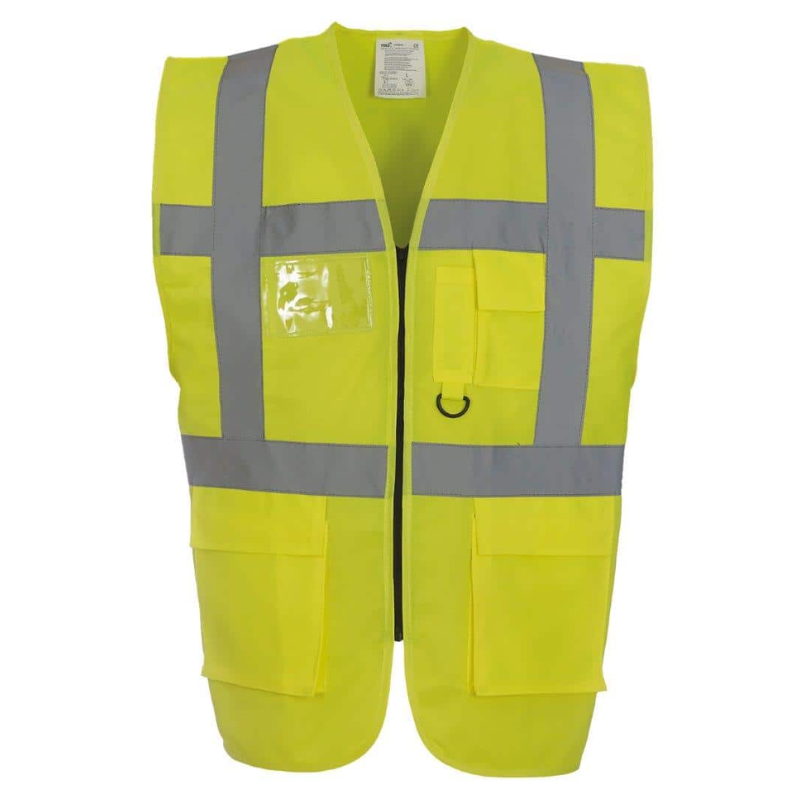
Fluorescent yellow
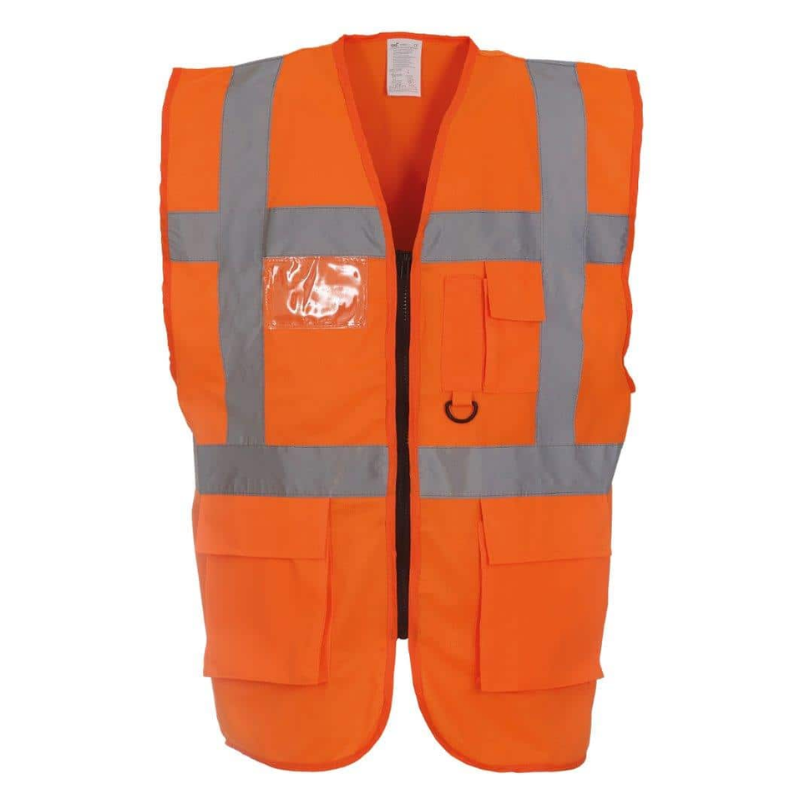
Fluorescent orange

Fluorescent red
As long as a garment meets hi-vis regulations, all three colours are equally compliant. The choice comes down to where the garment will be worn and how easily it can be seen against its surroundings.
In other words, choosing between yellow and orange is about selecting the colour that offers the best visibility for the specific risks on your site. A warehouse, a busy construction project and a railway all present different visual environments, so the most suitable hi-vis colour varies.
The colour of your hi-vis vests and clothing should always form part of your workplace risk assessment. As part of that assessment, you’ll need to look at lighting conditions, nearby vehicles, and whether there are specific industry policies you need to know. Some sectors, particularly rail, have their own specifications (RIS-3279-TOM) that go beyond the minimum requirements of EN ISO 20471 hi-vis regulations.
It’s also important not to confuse colour with garment Class. The Class of a hi-vis garment is determined by the amount of fluorescent and reflective material it contains, not whether it’s yellow, orange or red. So, a Class 3 Hi-visibility jacket can be yellow or orange and still provide the same level of compliance.

Yellow vs Orange Hi-Vis: At a Glance
While both colours meet the same safety standard, they each have strengths in different working environments. Let’s compare yellow vs orange hi-vis side by side to help you choose the most suitable option for your team.
| Factor | Fluorescent Yellow | Fluorescent Orange |
| EN ISO 20471 compliant? | ✔ Yes | ✔ Yes |
| Daytime brightness | Higher luminance (appears brighter) | Slightly lower luminance than yellow |
| Best background contrast | Concrete, roads, buildings and urban environments | Trees, grass, foliage and rural landscapes |
| Typical industries | Construction, highways, warehousing, manufacturing | Rail (where specified), forestry, landscaping, some emergency services |
| Most common choice | The UK’s most widely used hi-vis colour | Less common but widely used in specialist sectors |
| Availability | Most widely stocked | Widely available |
| Affects Garment Class? | No – Class depends on material area | No – Class depends on material area |
| Suitable for company branding? | Yes | Yes |
The key takeaway is there isn’t a universally “better” hi-vis colour. Fluorescent yellow offers the highest apparent brightness and is the default choice for many UK workplaces, while fluorescent orange provides better contrast in rural environments.
When to Choose Fluorescent Yellow
For the majority of UK workplaces, fluorescent yellow hi-vis workwear is the default choice. Its high luminance makes it appear exceptionally bright in daylight, so workers stand out against roads and concrete buildings where visibility is critical.
That’s why you’ll see yellow hi-vis t-shirts worn across construction sites, highways, warehouses, manufacturing facilities and distribution centres. It offers the strongest contrast against the grey and dark backgrounds commonly found in built-up environments.
Ideal for Construction and General Site Work
Construction sites are fast-moving environments with heavy machinery and multiple trades working alongside one another. Fluorescent yellow helps workers stand out from a distance, whether they’re operating equipment or just moving around site.
Because it’s the most widely recognised hi-vis colour in the UK, it’s also the easiest option when ordering clothing for larger teams or multiple locations.

Well Suited to Roads, Warehouses and Urban Environments
Yellow hi-vis performs particularly well anywhere the background is made up of tarmac, concrete, steel or buildings. It creates a strong visual contrast that helps workers stand out to drivers, plant operators and colleagues, even in changing weather conditions.
The Best Choice Unless Your Industry Says Otherwise
If there isn’t an industry requirement to wear a particular colour, fluorescent yellow is usually the safest starting point. It offers the best visibility and is the colour most people instinctively associate with high-visibility clothing.
That said, colour should never be chosen on familiarity alone. The best choice is always the one that provides the greatest contrast against the environment your team works in, supported by a suitable workplace risk assessment.
Here are some of our clients that use fluorescent yellow:
- Graham Heath Construction
Graham Heath Construction use Hi-Vis yellow because it works best for them out on a construction site, standing out clearly in all conditions. Below is a photo of one of their team members wearing a hi-vis softshell, finished with a crisp full-colour embroidered logo that keeps their brand looking professional in the field.

Wearing the Regatta Hi-Vis Pro Softshell
- JCA Engineering
JCA opt for Hi-Vis yellow because it delivers maximum visibility on busy, active sites where being seen keeps their team safe. Below is one of their team members wearing a hi-vis vest with a clean, embroidered back logo that keeps the branding sharp and professional all day.

Wearing the Essential Workwear Kapton Hi-Vis Vest
When to Choose Fluorescent Orange
Fluorescent orange is the better choice where workers need to stand out against grass, trees, hedgerows and other naturally green backgrounds. While it isn’t quite as bright as fluorescent yellow, it creates stronger contrast in green environments and makes it easier to spot from a distance.
If your team works in woodlands, parks, countryside locations or alongside dense vegetation, fluorescent orange is usually easier to distinguish from the background than yellow.

Commonly Specified for Rail Work
Orange hi-vis is also closely associated with the rail industry. Fluorescent yellow can sometimes appear green from a distance, particularly around railway signalling, so orange is a safer choice in a dangerous setting. That’s why you’ll often see rail workers wearing orange hi-vis overalls on the tracks.
However, it’s important not to assume that orange is automatically required for every rail project. Many rail organisations, including Network Rail, have their own clothing specifications that go beyond EN ISO 20471 hi-vis regulations. Always check your sector’s requirements before ordering workwear.
Here are some of our clients that use fluorescent orange:
- Gondolin Land & Water
Gondolin choose Hi-Vis orange to keep their team clearly visible on site, standing out sharply against most working backgrounds. Below is one of their garments in production, with the Gondolin logo being precision-embroidered directly onto the hi-vis fabric for a durable, professional finish that lasts.

Branding the Essential Workwear Kapton Hi-Vis Bomber Jacket
- Chepston Plant International
Chepston go for Hi-Vis orange for strong all-day visibility and a bold, professional look. Below is one of their hi-vis garments on the embroidery machine, with the Chepston logo being stitched in crisp detail to keep their branding sharp and hard-wearing.

Branding the Portwest Hi-Vis Fleece
Which Hi-Vis Colour Should You Choose? [Quick Decision Check]
Choose fluorescent yellow hi-vis if:
- You work on construction sites
- You work in warehouses
- You work around roads
- You want the most widely recognised option
- Your industry doesn’t specify a colour
Choose fluorescent orange hi-vis if:
- You work in forestry
- You work around heavy vegetation
- You work in rail environments that specify orange
- You need maximum contrast against green backgrounds
Can Employers Choose Either Colour?
In most industries, employers can choose either fluorescent yellow or fluorescent orange provided the garments comply with EN ISO 20471 and the choice is supported by a suitable workplace risk assessment.
What About Red Hi-Vis?
While this guide focuses on yellow vs orange hi-vis, it’s worth knowing that fluorescent red is the third background colour permitted under EN ISO 20471.
Red hi-vis clothing is far less common in UK workplaces and is typically reserved for specific applications rather than everyday use. Most employers will choose either fluorescent yellow or fluorescent orange because they’re more widely recognised and suitable for the majority of working environments.
Unless you have a specific operational reason to choose red, it’s unlikely to be the most practical option when purchasing high-visibility clothing for your workforce.
Expert tip from Essential Workwear
When we help businesses choose hi-vis clothing, colour is rarely the first question we ask. We start by understanding where the garments will be worn, whether there are industry specifications to meet, and what background workers need to stand out against. In most cases, that makes the right colour choice obvious.
Does Hi-Vis Colour Affect the Garment Class?
The colour of a hi-vis garment has no effect on its EN ISO 20471 Class. This is one of the most common misconceptions our clients have when choosing the best high-visibility clothing.
Whether a garment is fluorescent yellow, fluorescent orange or fluorescent red, its Class is determined by the amount of fluorescent background material and reflective tape it contains, not by its colour.
For example, a yellow Class 3 fleece jacket and an orange Class 3 fleece jacket provide the same level of compliance under the standard. The only difference is which colour offers the best visibility in the environment where it’s being worn.
Think of it this way:
- Colour helps a worker stand out against their surroundings.
- Class determines how much high-visibility material the garment provides.
They’re two separate considerations, and both need to form part of your risk assessment when choosing hi-vis workwear.
If you’re unsure which Class your team requires, read our guide on how the hi-vis classes work, which explains the differences between Class 1, Class 2 and Class 3 garments and when each should be worn.
Adding a Logo to Hi-Vis: Does It Affect Compliance?
Adding your company logo to hi-vis clothing is a great way to create a professional, consistent appearance across your team, but it needs to be done carefully. Branding can affect compliance if it’s applied incorrectly.
Logos are usually printed or embroidered onto the fluorescent background. If the branding covers too much of either material, the garment may no longer meet the minimum visible surface area required for its Class under EN ISO 20471 hi-vis regulations.

Where Should a Logo Be Placed?
Smaller logos on the chest are the simplest and most popular option. Larger back prints need more careful planning to avoid reducing the visible fluorescent background or reflective tape. Our workwear logo placement guide can help you understand where the best placement for your logo is depending on your garment choice.
At Essential Workwear, we can advise on compliant logo placement before production to make sure you get branded hi-vis clothing that looks professional without compromising its certification. Whether you’re ordering a handful of garments or kitting out an entire workforce, we’ll help ensure your branding works with the garment, not against it.
Yellow vs Orange Hi-Vis: The Final Verdict
Whether you choose fluorescent yellow or fluorescent orange, the most important thing is selecting the colour that’s right for your work environment. Both colours meet EN ISO 20471, but the best option depends on where your team works and any industry-specific requirements you need to follow.
If you’re unsure which garments are right for your business, our team is here to help. Whether you’re ordering ten garments or ten thousand, we’ll help you choose the right colour, the right Class and the right branding for your workplace. Get a quick, free quote from us now.
Frequently Asked Questions
Is yellow or orange hi-vis more visible?
Neither colour is universally more visible. Fluorescent yellow has a higher luminance, making it appear brighter in urban and built-up environments, while fluorescent orange often provides better contrast against trees and other green backgrounds. The best choice depends on where the work is being carried out.
Is orange hi-vis legal in the UK?
Yes. Fluorescent orange is one of the three background colours approved under EN ISO 20471 hi-vis regulations, alongside fluorescent yellow and fluorescent red. As long as the garment meets the standard, it’s fully compliant for use in the UK.
Why do railway workers wear orange hi-vis?
Many rail organisations specify fluorescent orange because it provides better contrast in the railway environment and helps avoid confusion with signalling, where fluorescent yellow can sometimes appear green at a distance. However, requirements vary between organisations, so you should always check your sector’s specification before committing to a colour.
Does hi-vis colour affect compliance?
Yellow, orange, and red can all comply with EN ISO 20471. Compliance depends on the garment meeting the requirements of the standard, while the choice of colour should be based on your workplace risk assessment and any industry-specific requirements.
Can yellow and orange be used on the same hi-vis garment?
Generally, no. Under EN ISO 20471, garments are designed using a single approved fluorescent background colour. Unlike some international standards, combining fluorescent yellow and fluorescent orange on the same compliant garment isn’t generally permitted, so it’s best to choose one colour that suits your working environment.