

Categories
Workwear Quote Checklist: What to Prepare Before Requesting a Quote
To get an accurate branded workwear quote first time, have these ready: the garments (and colours) you need, rough quantities, your branding method and logo positions, print-ready logo files and your delivery date and locations.
Most quotes get held up not by complicated branding but by a few missing details, usually quantities, embroidery vs print, or whether some of the team also need hi-vis or PPE. Five or ten minutes of prep lets us recommend the right products from the start and price the job properly, without a round of follow-up questions.
Whether you’re kitting out ten people or rolling out across multiple sites, the same preparation applies. Here’s the checklist we recommend working through first:
Quick Workwear Quote Checklist
Before requesting a workwear quote, make sure you’ve prepared:
- The workwear garments you need (colour also preferable)
- Estimated quantities (We don’t need a size breakdown straight away)
- Branding preference (this may change upon receipt of artwork)
- Logo(s)
- Position of logo(s)
- Delivery address(s)
- Required delivery date
Once you have approved your quote and are ready to move to order, we need these points:
- Full size and colour break down
- Final logo artwork
- Preferred payment method (Credit Card or Bank Transfer)
Common Mistakes That Delay Workwear Quotes
You don’t need to have every detail worked out before requesting a workwear quote, but there are a few pieces of information that regularly slow things down. They’re usually small things that are easy to overlook, yet they often mean we have to come back with more questions before we can recommend the right products or provide accurate pricing.
The most common ones are:
- Not deciding which garments each member of the team actually needs.
- Sending a logo that’s too small or low quality for embroidery or print.
- Mentioning PPE or safety requirements after the quote has already been prepared.
- Forgetting to tell us when the workwear is needed or whether it needs delivering to more than one location.
Don’t let that put you off requesting a quote. We don’t expect every quantity or size to be final at this stage, and we can usually work from sensible estimates. The more information you can provide upfront, though, the easier it is to recommend the right products first time and prepare a quote that’s much closer to your final order needs.
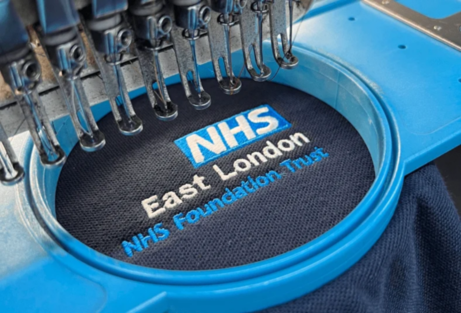
Decide Which Workwear Your Team Actually Needs
One of the first questions we’ll ask for your workwear quote checklist is who you’re buying for. The right uniform for someone working behind a trade counter is rarely the right choice for a warehouse operative or engineer who spends all day outdoors.
It’s easy to fall into the trap of ordering the same clothing for everyone, especially if you’re trying to keep things simple. In reality, most of our clients don’t need one standard uniform. Different roles have different demands, and choosing garments to suit each job usually gives your team a better experience while helping you avoid paying for clothing that isn’t needed.
As a starting point, think about the types of garments each department is likely to wear day to day:
- Polo shirts and t-shirts for everyday branded uniforms.
- Sweatshirts and hoodies where an extra layer is useful.
- Softshell and waterproof jackets for employees who regularly work outdoors.
- Hi-vis clothing for warehouse staff, roadside workers and construction teams.
- Work trousers or shorts designed for comfort and durability.
- Safety footwear and PPE where protection is part of the job.
Typical Workwear by Job Role
| Job Role | Typical Workwear |
| Office or reception staff | Branded polo shirt, fleece or softshell jacket |
| Warehouse operatives | Hi-vis polo, hi-vis bodywarmer, work trousers, safety boots |
| Construction workers | Hi-vis clothing, safety boots, hard hat and other PPE |
| Field engineers | Branded polo, work trousers, waterproof jacket and safety footwear |
| Delivery drivers | Polo shirt, softshell jacket and lightweight waterproof |
A warehouse team, for example, might need hi-vis polos, bodywarmers, work trousers and safety boots, whereas an office team may only need embroidered polo shirts and lightweight fleeces. Breaking your order down by department like this gives us a much clearer picture of what you actually need, which means we can recommend suitable products instead of making assumptions.
We’ve also found that businesses often spend less this way. Rather than buying identical uniforms for everyone, you’re investing in clothing that’s appropriate for each role, whether that’s a waterproof jacket for engineers working outside or a smart branded polo shirt for customer-facing staff.
Confirm Quantities and Sizes
Once you’ve decided what your team needs, the next thing we’ll want to know is roughly how many of each item you’re looking for. You don’t need to have every size confirmed before requesting a quote, but the more information you can give us, the more accurate the pricing is going to be.
Rather than telling us you have 25 employees, try breaking the order down a little further. You might need three polo shirts for each person, one softshell jacket and one pair of work trousers. An estimated size split, even if it’s only a rough guide, also helps us check product availability and recommend the most suitable options.
Expert Tip From Our Workwear Team:
If your business is growing, it’s worth thinking beyond today’s team as well. We often recommend ordering a small amount of additional stock for new starters or replacements, particularly in the most common sizes. Around 10–15% extra is usually enough to give you some flexibility without tying up too much budget in spare uniforms.
Don’t worry if your figures aren’t final. It’s completely normal for businesses to tweak quantities or confirm sizes later in the order process, and we can work through those changes with you before anything goes into production. At the quote stage, sensible estimates are usually all that’s needed.
One thing we’ve learned over the years is that a little planning here can save a surprising amount of time later. Clients that order a handful of spare garments in popular sizes avoid the hassle and cost of placing another branded order a few weeks later when someone new joins the team.
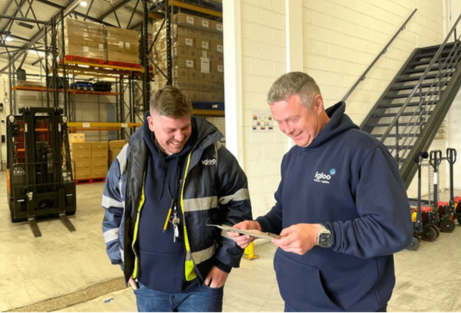
Prepare Your Branding Requirements
Branding is one of the biggest factors affecting the cost of a workwear order, so it’s worth giving it some thought when working on your workwear quote checklist. Having a clear idea of how you want your uniforms to look makes it much easier for us to recommend the right branding method and provide accurate pricing.
One of the first things we’ll ask is about logo placement. For many businesses, an embroidered logo on the left chest is all that’s needed. Others prefer to add a larger logo across the back, sleeve branding or a combination of positions, particularly if employees spend a lot of time working outdoors or on customer sites. Every branding position adds to the production process, so deciding what’s genuinely useful helps keep your quote as accurate as possible.
It’s also worth thinking about whether each garment needs to be personalised. Adding employee names, job titles or department names can make larger teams easier to identify and create a more professional appearance, but it also means every garment has to be decorated individually. If that’s something you’re considering, mentioning it at the early quote stage allows us to factor it into both the price and lead time.
Branding Methods at a Glance
| Branding Method | Best For |
| Embroidery | A durable, professional finish that’s ideal for everyday workwear and garments that are regularly washed. |
| Screen Print | Larger graphics, bold logos and simple designs on t-shirts, hoodies and other casual garments. |
| DTF (Direct to Film) | Detailed, multi-coloured logos with fine lines or gradients that embroidery can’t easily reproduce. |
If you’re not sure which branding method is right for your logo, don’t worry. It’s a question we’re asked every day, and the answer usually depends on the garment, how the clothing will be used and your logo design. We’ll always recommend the option that gives you the best finish and the best value, rather than simply choosing the cheapest or most expensive method.
Have Your Logo Files Ready
We recommend sending your logo over with your quote request. That way, we can check if it’s suitable for embroidery using our artwork guidelines or print and price the job accurately.
The ideal file is a vector logo, such as an .AI, .EPS or .PDF. These can be resized without losing quality, so they’ll stay crisp whether they’re embroidered onto the left chest of a polo shirt or printed across the back of a jacket. If you don’t have a vector file, a high-resolution PNG (300 DPI or above) is usually enough for us to work from.
If you’ve ordered branded workwear before, it’s also useful to let us know your brand colours, particularly if you have Pantone references. That helps us match your existing branding as closely as possible, especially if you’re adding to uniforms you’ve already had produced.
Don’t worry if all you have is the logo from your website or an old image that’s been sitting in a folder for years. That’s actually far more common than you might think, and it’s something we deal with regularly.
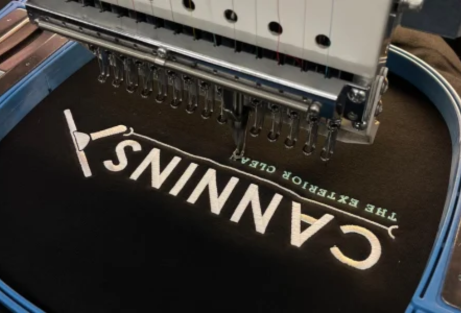
If Your Artwork Needs Updating
If your existing files aren’t suitable for embroidery or printing, we can often redraw or digitise your logo into a production-ready format before your order goes ahead. It’s much better to identify that at this early stage than discover it once production is due to start.
Expert Tip From Our Workwear Team:
One thing that’s always worth checking before you send anything over is that you’re using the latest version of your logo. We’ve had businesses accidentally send artwork from an old website, previous rebrand or outdated marketing material, which usually means extra revisions before production can begin. Spending a minute checking the file can save a lot of headaches later.
Check Any Safety or Compliance Requirements
If any of your team needs PPE or certified safety clothing, it’s worth mentioning that before requesting a quote. It means we can recommend products that are suitable for the job from the outset, rather than finding out later that a particular garment doesn’t meet the required standard for your industry.
For some businesses, that might simply mean choosing the right class of hi-vis clothing or selecting safety footwear that’s appropriate for the working environment. Others may need flame-retardant clothing, hard hats or more specialised PPE depending on the risks their employees face.
Compliance at a Glance
| Requirement | Typical Products |
| EN ISO 20471 Class 1 | Lower-risk hi-vis clothing for environments where vehicles travel at slower speeds. |
| EN ISO 20471 Class 2 | Hi-vis garments commonly used in roadside, industrial and warehouse environments. |
| EN ISO 20471 Class 3 | The highest level of visibility for high-risk working environments. |
| Safety Footwear | Protective boots or shoes selected according to the hazards of the role. |
| Specialist PPE | Flame-retardant clothing, hard hats and other certified protective equipment where required. |
For example, hi-vis clothing is certified as Class 1, Class 2 or Class 3 under EN ISO 20471, depending on the level of visibility needed for the working environment. Letting us know those requirements before we prepare your quote means we can recommend compliant garments straight away, rather than pricing products that aren’t suitable.
If you’re not sure which standards apply, don’t worry. We don’t expect every customer to know the difference between hi-vis classes or safety footwear ratings. Tell us what your team does, where they work and any site requirements you need to meet, and we can point you towards the right products.
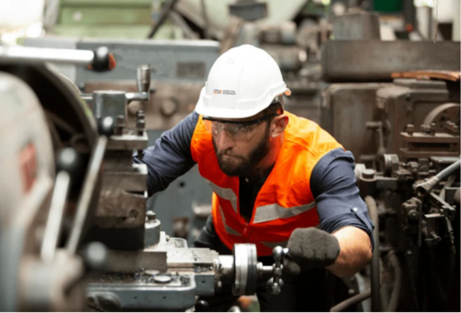
One thing that’s worth mentioning early is if you need flame-retardant clothing. These garments usually need to be embroidered rather than printed, so knowing that before we prepare your quote helps us recommend suitable products and avoid changing specifications later.
Understanding Fabric Weight
When you’re comparing similar garments, you’ll often see the fabric weight listed as GSM (grams per square metre). It’s not the only measure of quality, but it can be a useful indicator of how substantial a garment feels and how well it’s likely to stand up to everyday use.
As a general guide:
- Around 150 GSM is common for lightweight t-shirts that are ideal for warmer weather, promotions or occasional wear.
- Around 200 GSM or above is typical for more durable polo shirts designed for regular use and repeated washing.
That doesn’t automatically mean heavier is better. Some jobs benefit from lightweight, breathable clothing, while others call for something more robust. The important thing is choosing garments that suit the way your team actually works.
One conversation we have quite regularly is with businesses that assume they need the most expensive option to get good-quality workwear. In reality, that’s not always the case. Sometimes a mid-range garment offers the best balance of comfort, durability and value. Letting us know how your team uses their workwear helps us recommend products that make sense for your business, rather than simply working to a price point.
Think About Cost Per Wear
It’s easy to focus on the price of a single garment, but that’s only part of the picture. A polo shirt that costs a few pounds more yet still looks smart after a year of regular washing is far better value than a cheaper alternative that needs replacing after a few months.
That’s why we always encourage our clients to think about cost per wear rather than unit price alone. For teams wearing their uniform every day, investing a little more upfront will reduce your replacement costs over time. If the clothing is only being used occasionally, there’s usually no need to pay for a premium garment that won’t see the same level of use.
When you request a quote, it’s also helpful to let us know if you’re looking for an entry-level, mid-range or premium solution, or simply tell us how your team will be using the clothing. We’ll recommend products that fit the job, rather than assuming the most expensive option is the best choice.
Confirm Your Delivery Dates and Locations
The last thing on your workwear quote checklist is when you need your workwear. It might seem like a small detail, but your deadline can influence everything from the garments we recommend to the branding methods that are suitable for your order.
If you’re ordering for a new site opening or getting ready for an event, let us know when the uniforms need to arrive. The earlier we know about any deadlines, the more options we’ll have when recommending products and planning production.
It’s also helpful to tell us where the order needs to be delivered. Sending everything to one address is straightforward, but if you’re ordering for multiple branches or depots, a simple breakdown of quantities for each location helps us prepare a more accurate quote and makes the fulfilment process much smoother.
As a guide, branded workwear is typically ready around 7–10 working days after artwork approval, although this will vary depending on the garments you’ve chosen and if delivery is the UK, Europe or elsewhere. Because all of our branding is completed in-house, we have greater control over production than suppliers who outsource decoration, so we can give you realistic lead times from the start. International orders can take 3+ weeks and are subject to custom clearance that is out of our control.
Make Distribution Easier with Uniform Manpacking
If you’re ordering for a larger team, it’s easy to end up with boxes full of garments that then need sorting into individual employee orders. That can take hours, particularly if people work across different departments or locations.
Our Uniform Manpacking service takes that job off your hands. Each employee’s uniform is packed into its own clearly labelled package, ready to distribute as soon as it arrives. So, when you’re welcoming a group of new starters or sending uniforms directly to remote employees, everything is organised before it leaves us.
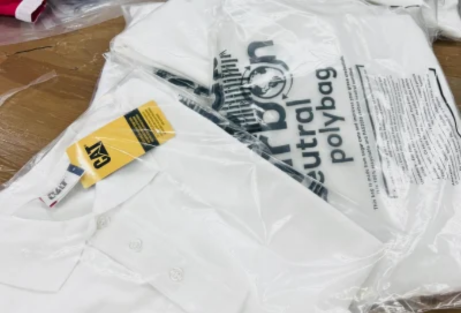
If your order is going to more than one location, sending us a simple spreadsheet with delivery addresses and quantities for each site helps us plan everything correctly from the outset. It only takes a few minutes to prepare, but it makes it much easier to ensure every employee receives the right uniform without delays or unnecessary sorting.
What Happens After You Request a Workwear Quote?
Once you’ve sent us your workwear quote checklist, we’ll take a proper look at what you’re trying to achieve rather than simply pricing a list of products. If we think there’s a better option for the way your team works, or a way to improve value without compromising quality, we’ll suggest it before we prepare your quote. Every order is different, but the process normally looks something like this.
We Review Your Requirements
The first thing we do is make sure everything adds up on your workwear quote checklist. We’ll look at the garments you’ve requested, where you’d like your branding, your quantities, delivery timescales and any safety requirements. If something doesn’t look quite right, we’ll get in touch before we prepare your quote.
We Put Your Quote Together
Once we’ve agreed what you’re looking for, we’ll price everything up and send you a clear, no-obligation quote. If there are different options worth considering, perhaps a premium garment alongside a more budget-friendly alternative, we’ll include those so you can compare them before making a decision.
What happens after your quote is converted to order?
Once you’re happy with your quote, converting it to an order is straightforward: you approve the artwork proof, we move the order into production, and every garment is branded, checked and packed before it’s despatched to you.
You Check the Artwork
Once you are happy and place your order, before anything is embroidered or printed, we’ll send you an artwork proof to approve showing exactly how your logo will appear on each garment. This is your chance to make sure everything looks right, from the logo position and colours through to employee names or job titles if you’ve chosen personalised clothing.
We Get Everything Ready for Despatch
Once you’ve approved the artwork, we’ll move your order into production. Every garment is branded, checked and packed before it leaves us. If you’ve asked for Uniform Manpacking or deliveries to multiple sites, we’ll organise that as part of the fulfilment process so the order arrives exactly as planned.
For larger orders, those final checks are just as important as the branding itself. Making sure every employee receives the correct garments, in the right sizes and at the right location, is all part of delivering a smooth rollout.
Your Final Workwear Quote Checklist
By this point, you should have everything you need to request a workwear quote. Don’t worry if every detail isn’t final, but having the basics ready means we can prepare a much more accurate estimate and spend less time coming back with additional questions.
Before you get in touch, make sure you’ve got:
- The workwear clothing you need
- Estimated quantities and a rough size breakdown
- Your branding requirements and logo positions
- Your logo files and brand colours
- Your preferred delivery date and delivery location(s)
If you’re missing one or two of those, that’s absolutely fine. We can help you work through the details together. The workwear quote checklist is simply there to make the process quicker for you and to help us recommend the most suitable products from the start.
Request Your Workwear Quote
Once you’ve got the basics together, send them over and we’ll take it from there. We’ll review your requirements, recommend suitable garments if there’s a better option, advise on the most appropriate branding method and put together a quote based on what your business actually needs. If something isn’t quite right, we’ll talk it through before anything goes into production.
Ready to get started? We’d be happy to put together a no-obligation workwear quote.
If you’re ordering workwear on a regular basis, ask us about our Corporate Accounts service. It’s designed to make repeat ordering simpler, whether you’re managing one site or several, with support for ongoing uniform management, employee ordering and branded workwear as your business grows.
Frequently Asked Questions About Requesting a Workwear Quote
What information do I need to get a workwear quote?
To prepare an accurate workwear quote, we’ll need to know which garments you’re looking for, roughly how many you need, your branding requirements, any logo files you have, whether there are any PPE or compliance requirements, your budget and when you need the order. Don’t worry if every detail isn’t final. We can work from sensible estimates and help you refine things like sizes and quantities before your order goes into production.
How long does branded workwear usually take to deliver?
Branded workwear is typically ready around 7–10 working days after artwork approval, although this can vary depending on the garments you’ve chosen, the branding method and the size of your order. If you’ve got a deadline, let us know when you request your quote. The sooner we know about it, the more options we’ll have when planning your order. International delivers can be 3+ weeks and are subject to custom clearance that is out of our control.
What logo file format is best for workwear branding?
Vector files such as .AI, .EPS and .PDF are the best formats because they can be resized without losing quality. If you don’t have a vector file, a high-resolution PNG at 300 DPI or above is usually enough for us to assess your artwork and prepare a quote. If all you have is a logo from your website or an older image, send it over anyway. We can redraw or digitise artwork if it isn’t suitable for embroidery or print.
Can all workwear be branded with a logo?
Most workwear can be branded, but the method depends on the garment. Polo shirts, hoodies, jackets and many hi-vis garments can be embroidered or printed, while flame-retardant clothing is generally embroidered to help maintain its protective properties. Some products, including safety footwear and safety glasses, can’t normally be branded. If you’re ordering specialist PPE, we’ll recommend the most suitable branding method as part of your quote.
How many uniforms should I order for each employee?
That depends on how often your team wears their workwear. Employees wearing branded uniforms every day will usually need several polo shirts or t-shirts so they always have clean clothing available, along with outer layers where appropriate.
If your business is growing, it’s also worth considering a few spare garments in the most common sizes. We recommend allowing around 10–15% extra for new starters and replacements, as it can save you placing another order sooner than expected.
Do I need exact sizes before requesting a quote?
No. A rough size breakdown is usually enough for us to prepare an accurate quote for you. It’s completely normal for sizes to change before an order is placed, particularly if you’re ordering for a larger team. We can confirm everything against a sizing guide before production starts, so there’s no need to wait until every employee has been measured before requesting your quote.