

Categories
What Are Waterproof Workwear Ratings? EN 343 Standards & Breathability Explained
Choosing waterproof workwear comes down to three things, and this guide explains all of them so you can match the right kit to the job without overpaying:
- Waterproof rating — how much water pressure the fabric resists before it leaks
- Breathability rating — how easily sweat vapour escapes so your team doesn’t feel damp inside
- EN 343 — the standard that tests how clothing actually performs in wet weather
After all, a delivery driver nipping from the van doesn’t need the same jacket as a groundworker out in the rain for eight hours.
What Do Waterproof Workwear Ratings Mean?
Waterproof workwear ratings tell you how much water pressure a fabric can handle before water starts getting through. They’re measured in millimetres (mm) using something called a hydrostatic head test. The higher the number, the more pressure the fabric can withstand.
During the test, water pressure is gradually increased against a piece of fabric until it starts to leak. So, if a jacket has a waterproof rating of 10,000mm, that means its fabric has withstood pressure equivalent to a 10-metre column of water under test conditions.
Sounds impressive, doesn’t it? And it is, but there’s a catch. That number tells you how the fabric performs, not how well the finished jacket will keep your team dry. A poorly sealed seam or an exposed zip can let rain through regardless of how waterproof the material is.
Waterproof vs Water-Resistant vs Water-Repellent
You’ll see all three terms when shopping for workwear, and they’re not interchangeable:
- Waterproof: Designed to stop water penetrating the fabric, even during prolonged rain.
- Water-resistant: Offers some protection against light rain, but water can eventually soak through during heavier or longer exposure.
- Water-repellent: Usually has a special surface treatment, known as a durable water-repellent (DWR) finish, that makes rain bead up and roll off the fabric. It doesn’t mean the material itself is waterproof.
If you’re ordering jackets for a team that spends most of the day outside, don’t be won over by a ‘water-repellent’ label. Check the actual waterproof workwear rating and whether the garment meets the relevant rain-protection standard. That’s a much better indication of whether it’ll cope with a wet working day.
Waterproof Ratings Explained: What the Numbers Mean
Waterproof ratings range from around 1,500mm to over 20,000mm. The higher the number, the more water pressure the fabric can take before it leaks. For most outdoor work, we suggest starting at 10,000mm. If your team spends entire shifts out in heavy rain, it’s worth looking at 15,000–20,000mm or higher.
Of course, there’s no point paying for extreme waterproof protection if your staff only pop outside to unload the occasional delivery. Equally, a cheap showerproof jacket isn’t going to cut it for someone working on the roads in November.
Here’s how we’d match different waterproof workwear ratings to the kind of work your team does.
| Waterproof Rating | Level of Protection | Typical Workwear Use |
| Up to 5,000mm | Light showers and short periods of exposure | Showerproof jackets for occasional outdoor tasks |
| 5,000–10,000mm | Light to moderate rain | Delivery drivers and workers moving between indoor and outdoor environments |
| 10,000–15,000mm | Moderate to steady rain | Construction workers and groundworkers spending extended periods outside |
| 15,000–20,000mm | Heavy, prolonged rain and increased water pressure | Highways maintenance, utilities and demanding outdoor work |
| 20,000mm+ | Very high resistance to sustained water pressure | Teams regularly working in particularly exposed or challenging conditions |
So, Is a 10,000mm Waterproof Rating Good Enough for Work?
A 10,000mm waterproof rating is a good choice for many outdoor jobs. It gives you a useful level of protection against steady rain without pushing you towards the most expensive waterproof clothing that might be overkill.
We’d recommend going higher when your team faces prolonged rain or regularly puts pressure on the fabric. Think about a groundworker kneeling on wet concrete. Their knees are pressing against a soaked surface, which puts far more pressure on the material than rain simply falling onto a jacket.
If your team members are kneeling all day, check out our custom knee pad work trousers to make their day much more comfortable.
What Is EN 343?
EN 343 is a European standard for protective clothing designed to keep workers dry in wet weather. It’s the benchmark for rain-protection PPE, covering both waterproof performance and breathability. It also checks how well materials and seams stand up to water after simulated wear.
A jacket might boast a 15,000mm waterproof workwear rating, which sounds great on paper. But what happens after months of working outdoors? Or when rain starts finding its way through the stitching? The fabric rating alone can’t answer those questions.
Under EN 343:2019, materials and seams are tested for water penetration, including after treatments designed to simulate wear. Materials are put through tests such as abrasion and repeated flexing to see how they hold up. There’s also an optional rain-tower test that checks how the finished garment handles simulated rainfall.
If you’re buying waterproof PPE for your team, we always recommend checking its EN 343 certification. A high millimetre rating is worth knowing, but it isn’t proof that the jacket meets a recognised safety standard. You want to know the clothing is suitable for the conditions your team actually faces, not just that the fabric performed well in a laboratory.
EN 343 Classes Explained
EN 343:2019 gives waterproof workwear two ratings, each running from Class 1 to Class 4. The first tells you how well the garment resists water getting through, and the second measures breathability. Class 4 is the highest rating for both.
| EN 343 Class | Waterproof Protection | Breathability |
| Class 1 | Basic resistance to water penetration | Lowest breathability (Ret above 40) |
| Class 2 | Resistance to at least 8,000 Pa after specified pre-treatment | Moderate breathability (Ret above 25 to 40) |
| Class 3 | Resistance to at least 13,000 Pa after specified pre-treatment | Good breathability (Ret above 15 to 25) |
| Class 4 | Resistance to at least 20,000 Pa after specified pre-treatment | Highest breathability (Ret 15 or below) |
You’ll notice the breathability column uses something called Ret. That’s simply a measure of how much resistance the material puts up against escaping moisture vapour. The lower the Ret number, the more breathable the fabric. It’s the opposite of the class system, where higher numbers mean better performance. At the top of the scale, EN 343 Class 4 requires the fabric to resist at least 20,000 Pa of water pressure and achieve a Ret of 15 or below, while Class 1 covers basic water resistance with a Ret above 40.
One thing worth knowing is that EN 343 classes don’t directly match the millimetre or gram ratings you’ll see advertised on outdoor clothing. The tests are different, so you can’t convert one into the other.
When you’re comparing jackets for your team, pay attention to both EN 343 numbers. A jacket with Class 4 waterproofing might sound like the obvious winner, but if it only has Class 1 breathability, someone doing heavy manual work could end up feeling pretty sweaty by lunchtime.
What’s the Difference Between EN 343 Class 3 and Class 4?
EN 343 Class 4 offers better waterproof protection and breathability than Class 3. For waterproofing, Class 3 must withstand at least 13,000 Pa of water pressure, while Class 4 raises that to 20,000 Pa. On the breathability side, Class 4 allows moisture vapour to escape more easily because it has a lower Ret threshold.
So, is Class 4 worth paying more for? If your team spends most of the day working outside in heavy rain, we’d recommend going for Class 4. That extra resistance to water penetration is useful when workers are regularly exposed to our wet UK weather.
How to Read an EN 343 Label
Let’s say you’re looking at a waterproof jacket marked EN 343 4/4. Here’s what you’re getting:
- First 4: The highest class for waterproof protection, making it a strong choice for workers exposed to heavy rain.
- Second 4: The highest breathability class, helping perspiration vapour escape when your team is working hard.
You might also spot an R or X after the numbers. These refer to an optional rain-tower test, where the finished jacket gets sprayed with simulated rainfall to see how well it keeps water out.
An R means the garment passed the test, while an X means it wasn’t tested. Don’t mistake that X for a failure. It simply means the manufacturer hasn’t carried out that optional assessment.
Clothing Breathability Ratings Explained
Breathability ratings tell you how easily sweat vapour can escape through a fabric. They’re measured in grams per square metre over 24 hours (g/m²/24h), and the higher the number, the more breathable the material.
For example, a workwear jacket rated at 10,000g/m²/24h allows more moisture vapour through than one rated at 5,000g when tested using the same method.
You might be wondering why breathability matters when the whole point of a waterproof jacket is keeping rain out. It’s because physical work makes your team sweat whatever the weather, so a good, branded work jacket needs to let that moisture escape as well as keep rain from getting in.
Here’s how we’d match different breathability ratings to the work your team does. As a rule, 10,000g/m²/24h suits active manual work, while physically demanding jobs call for 15,000g or higher.
| Breathability Rating | Breathability Level | Typical Workwear Use |
| Under 5,000g | Low | Light activity, site supervision, and jobs involving little physical exertion |
| 5,000–10,000g | Moderate | General outdoor work at a steady pace |
| 10,000–15,000g | Good | Active manual work, including construction and trades |
| 15,000–20,000g+ | Very high | Physically demanding outdoor work involving sustained exertion |
Manufacturers don’t always use the same breathability test, so a 10,000g rating on one jacket isn’t necessarily directly comparable with another. And don’t try to match these figures to EN 343 breathability classes. They use different testing methods, so there’s no straightforward conversion between the two.
What Is a Good Breathability Rating for a Waterproof Jacket?
For active outdoor work, we recommend a breathability rating of at least 10,000g/m²/24h. If your team spends most of the day doing heavy manual work, look for 15,000g or higher. That extra breathability makes a real difference when they’re working hard in waterproof clothing.
Why Breathability in Waterproofs Matters
If your team feels damp inside their waterproof jackets, it doesn’t always mean rain is getting through. More often than not, it’s sweat getting trapped because the fabric isn’t breathable enough.
Take a groundworker laying paving slabs in the rain. They’re constantly bending and lifting, so they’re going to work up a sweat. If their jacket can’t release that moisture, they’ll soon feel wet inside, even if the waterproofing is working perfectly.
Good breathability makes a difference because it:
- Reduces moisture build-up: Allows perspiration vapour to escape rather than getting trapped inside the jacket.
- Helps regulate body temperature: Reduces that hot, clammy feeling during physical work.
- Keeps workers comfortable: Makes them less likely to unzip or remove their waterproof PPE when it’s raining.
Workwear Features That Help Keep Water Out
A high waterproof workwear rating is great, but it’s not much use if rain can sneak through the seams or run down someone’s neck. The way a jacket is made matters just as much as the waterproof fabric itself.
When you’re comparing waterproof workwear for your team, here’s what to look for:
- Taped or welded seams: Stitching leaves tiny holes in the fabric, so sealed seams help stop rain finding its way through.
- Storm flaps: A flap covering the main zip adds protection when workers are facing into driving rain.
- Adjustable cuffs and hems: These help keep water out when someone’s reaching overhead or moving around on site.
- Adjustable hoods: Look for good coverage without restricting visibility. If your team wears hard hats, make sure the jacket hood is designed to fit over one.
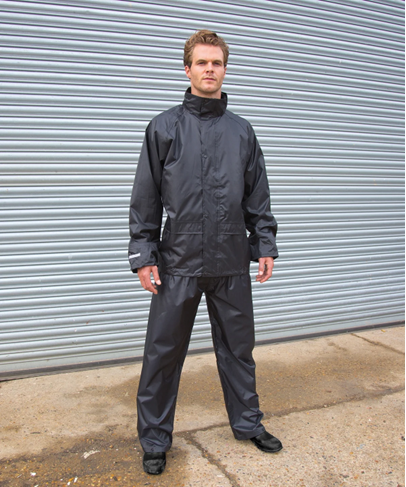
- Waterproof trousers: Don’t forget the bottom half! If someone’s kneeling on wet ground all day, a waterproof jacket won’t keep them dry. Properly fitted waterproof work trousers are just as important.
How to Choose the Right Waterproof Workwear for Your Team
The best waterproof workwear is the clothing that suits the job, not just the jacket with the highest rating. Before ordering, our workwear experts recommend asking yourself a few questions:
- How much time does your team spend in the rain? The longer the exposure, the higher the waterproof workwear rating you’ll need, along with EN343 certification where rain-protection PPE is required.
- How physically demanding is the work? The harder someone works, the more they’ll sweat. Look for higher breathability ratings to help prevent moisture building up inside their jacket.
- Will the clothing fit comfortably? Workers need to bend and reach without their jackets riding up or their workwear trousers restricting movement.
- Do they need additional PPE? If your team works around moving vehicles, check whether certified hi-vis clothing is required under your workplace risk assessment.
What our Workwear Experts say:
“There’s no point putting everyone in the most expensive waterproof jacket. If you’ve got lads digging trenches all day, they need something that’ll stand up to hours of rain. Someone who’s in and out of a van won’t want a heavy waterproof making it tough to drive. We’d rather get the right kit for each job than have you paying extra for features nobody needs.” – Louis Georgiou, Operations Director
Waterproof Hi-Vis and Safety Footwear
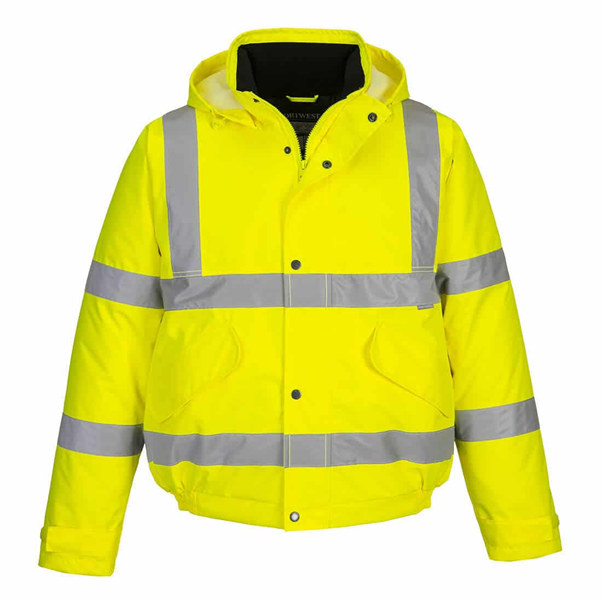
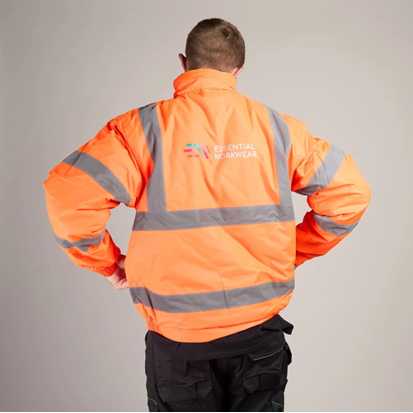
If your team needs hi-vis clothing as well as rain protection, make sure you’re checking both standards. Just because a jacket is high-vis doesn’t mean it’ll keep someone dry through an eight-hour shift.
For waterproof hi-vis jackets and clothing, look for:
- EN ISO 20471: Confirms the garment meets the relevant high-visibility requirements.
- EN 343: Confirms the garment has been tested for protection against rain.
This is really important for teams working on highways or construction sites where visibility is a safety requirement. If you’re ordering for rail workers, you may also need to check for RIS-3279-TOM compliance.
Wondering if you can brand hi-vis clothing? Read our complete guide on professionally branding PPE and hi-vis workwear.
What About Waterproof Safety Footwear?
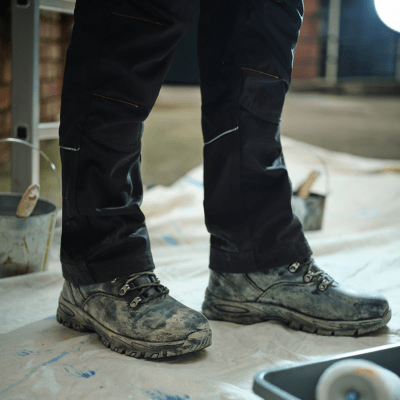
Safety boots don’t use EN 343 ratings. Instead, you’ll need to check their markings under EN ISO 20345.
When browsing our safety footwear, look out for two markings:
- WR: The complete boot has been tested for water resistance.
- WPA: The upper material has been tested for water penetration and absorption. This doesn’t mean the whole boot is waterproof.
If your team regularly works in wet conditions, we recommend looking for WR-rated footwear. And remember, there’s not much point investing in a brilliant waterproof jacket if someone’s boots are letting water in before lunchtime.
Shop Waterproof Workwear at Essential Workwear
Need waterproof workwear that’ll actually stand up to the conditions your team faces? At Essential Workwear, we’ll help you find the right protection without paying for features you don’t need.
Browse our range of workwear, including waterproof jackets and hi-vis clothing, to find the best kit for your team. Want to add your company logo? We can advise on suitable branding options for waterproof garments without compromising their protective performance.
Not sure which EN 343 rating your team needs? Get in touch with us today, and we’ll help you find the right kit for the job.
Frequently Asked Questions About Waterproof Workwear Ratings
What is a good waterproof rating for workwear?
A waterproof rating of 10,000mm is a good starting point for general outdoor work. If your team spends long shifts in heavy rain, we recommend looking at 15,000–20,000mm or higher. However, fabric rating doesn’t tell you everything. Check the garment’s construction and EN 343 certification where rain-protection PPE is required.
What does EN 343 4/4 mean on a jacket?
An EN 343 4/4 rating means the jacket achieves the highest class for both waterproof protection and breathability under EN 343:2019. The first 4 refers to water resistance, while the second tells you how breathable the material is. It’s a strong rating to look for when your team works outdoors in wet conditions.
What is a good breathability rating for waterproofs?
For active outdoor work, we recommend a breathability rating of at least 10,000g/m²/24h. If your team does heavy manual work throughout the day, consider 15,000g or higher. Higher breathability helps sweat vapour escape.
Why do I feel wet inside my waterproof jacket?
If you’re feeling damp inside your waterproof jacket, it could be trapped sweat rather than rain getting through. When you’re working hard, moisture can build up faster than the fabric can release it. A more breathable jacket or one with ventilation features will help. It’s also worth checking for damaged seams or worn waterproofing before replacing the garment.
Can waterproof workwear be branded with a logo?
Yes, many waterproof jackets can be branded with your company logo, but the method matters. Embroidery creates small holes in the fabric and so could affect its waterproof protection. At Essential Workwear, we can advise on suitable branding options for your chosen garments so you don’t compromise their performance.
Is EN 343 the same as EN ISO 20471?
No. EN 343 covers protection against rain, while EN ISO 20471 covers high-visibility clothing. If your team needs to stay visible while working in wet weather, look for garments certified to both standards. Your workplace risk assessment will help determine which protection is required, and our team at Essential Workwear are here to answer your questions.