

Categories
How to Claim Tax Relief on Workwear & Uniforms in the UK
If you wear a uniform to work and wash it at home, you could get workwear tax relief from HMRC. And it’s not just washing, the scheme covers repairing and replacing uniforms yourself as well.
Many UK employees don’t realise they can claim back tax on the cost of maintaining their work uniforms directly with HMRC. Claiming workwear & uniform tax relief could put money back in your pocket.
In most cases, you can claim a flat-rate allowance without keeping receipts, and you may even be able to backdate your claim for up to four previous tax years.
If you’ve ever wondered whether you’re eligible for HMRC’s uniform tax relief scheme, this guide will walk you through the entire process and help you understand exactly what you can and can’t claim.
Want to quickly know how much you could get back in tax relief? Click here to use our Uniform Tax Rebate Calculator.
This guide is for general information only and is not financial or tax advice. Always check the latest rules on gov.uk or speak to a qualified accountant.
Quick Answer: Workwear Tax Relief UK
- Who can claim? Employees who wear a qualifying uniform or protective clothing, pay to clean, repair or replace it themselves, and aren’t reimbursed by their employer.
- How much can you claim? Most workers qualify for HMRC’s standard £60 annual allowance, which is worth around £12 for basic-rate taxpayers and £24 for higher-rate taxpayers.
- How do you claim? Claim free of charge directly through HMRC vis this webpage. You can also claim using Form P87 or by phone.
- How far back can you claim? You can usually claim for the current tax year plus the previous four tax years (up to five years in total).
What Is Workwear Tax Relief?
According to HMRC, workwear tax relief allows eligible UK employees to reclaim tax on the cost of cleaning, repairing or replacing a required work uniform or protective clothing.
You might have heard workwear tax relief referred to as:
- Uniform tax relief
- Uniform tax rebate
- HMRC uniform allowance
- Work uniform tax relief
But it’s all the same system. In basic terms, if you’re employed and pay tax through PAYE, HMRC allows you to claim relief for certain work-related clothing expenses that you’ve paid for yourself. The relief reduces your taxable income, which means you effectively get some of the tax you’ve already paid back.
In most cases, employees claim a flat-rate allowance set by HMRC. So, you don’t need to keep receipts for washing or replacing your uniform. Some specialist occupations qualify for higher allowances, but most workers fall under the standard flat-rate scheme of £60 per year.
Those who qualify for higher rates include:
- Healthcare workers
- Construction and trades workers
- Transport workers
- Emergency services
- Manufacturing and engineering workers
- Armed forces
- Forestry and printing workers
If your occupation isn’t listed, you can still claim the standard £60 flat rate and you can backdate your claim by up to four tax years.
Following HMRC changes in October 2024, most expense claims do now require supporting evidence, but flat-rate uniform claims remain exempt, which is why they’re still quick to submit online.
Workwear tax relief typically covers costs associated with:
- Washing your work uniform
- Cleaning specialist workwear
- Repairing damaged uniforms
- Replacing worn-out qualifying work clothing
The key requirement is that the clothing must qualify under HMRC’s rules and that you paid the workwear maintenance costs yourself without being reimbursed by your employer.
Who Can Claim Tax Relief on Workwear?
You can usually claim workwear tax relief if you wear a recognisable uniform or required protective clothing, pay to maintain it yourself, your employer doesn’t reimburse you, and you’ve paid tax during the period you’re claiming for.
HMRC has specific rules around who qualifies, but you may be eligible if:
- You wear a recognisable work uniform, such as clothing with your employer’s logo or branding
- You wear specialist protective clothing required for your role
- You personally pay to wash, repair or replace the clothing
- Your employer does not reimburse those costs
- You pay Income Tax through PAYE
HMRC’s ‘recognisable uniform’ rule
One of the most important eligibility tests is whether your workwear is clearly identifiable as a work uniform.
If a member of the public could look at your clothing and identify your employer, it usually qualifies as a uniform under HMRC’s rules. That means if you work in an office and wear a standard suit or business casual clothes to work, you won’t qualify for workwear tax relief.
Examples of qualifying workwear uniforms include:
- Embroidered tunics
- Logo’d fleeces and workwear jackets
- Company-branded shirts
- Uniforms specific to healthcare, emergency services or transport workers
- High-vis items required for safety
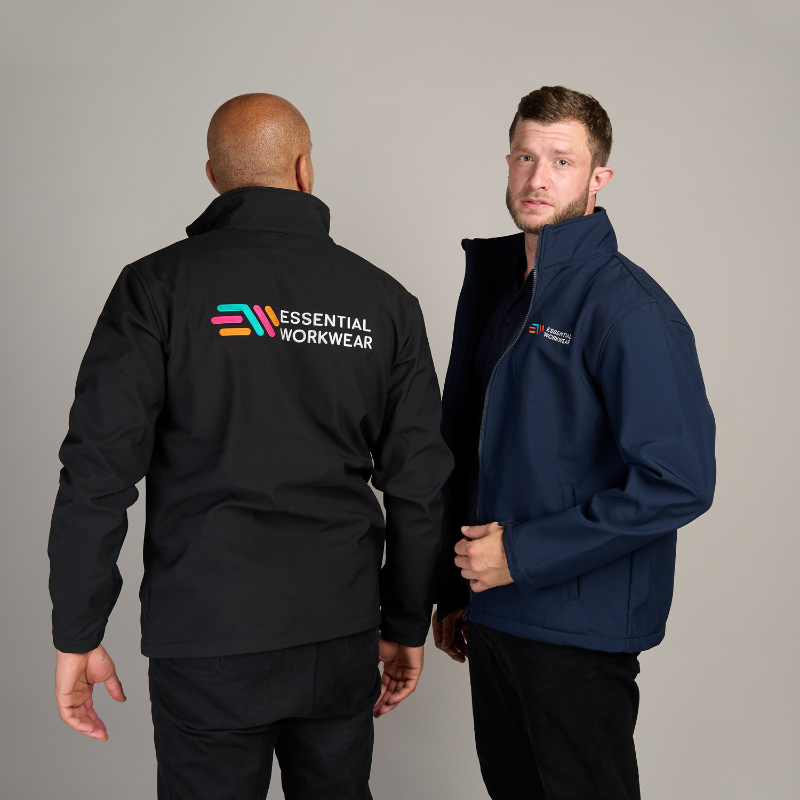
Who cannot claim workwear tax relief?
You generally cannot claim workwear tax relief if:
- Your employer already pays for cleaning, repairs or replacements
- You receive a uniform maintenance allowance that covers your costs
- You bought additional workwear by choice rather than because it was required
- The clothing doesn’t meet HMRC’s definition of a uniform or qualifying protective clothing
It’s also important to note that these rules apply to employees who pay tax through PAYE. If you’re self-employed, different rules apply and you’ll usually claim allowable clothing expenses through your Self Assessment tax return instead.
What Types of Workwear Qualify?
The main qualifier is that your clothing must be clearly linked to your work role. In most cases, that means it carries your employer’s branding or serves a specific protective purpose that goes beyond everyday clothing.
- Branded polo shirts with a company logo
- Embroidered work shirts and blouses
- Healthcare tunics and scrubs
- Hi-vis jackets and vests
- Overalls and coveralls
- Protective boots or safety footwear you maintain yourself
- Protective gloves and specialist work clothing
- Uniforms worn by emergency services personnel
- Airline and transport uniforms
- Hospitality uniforms featuring company branding
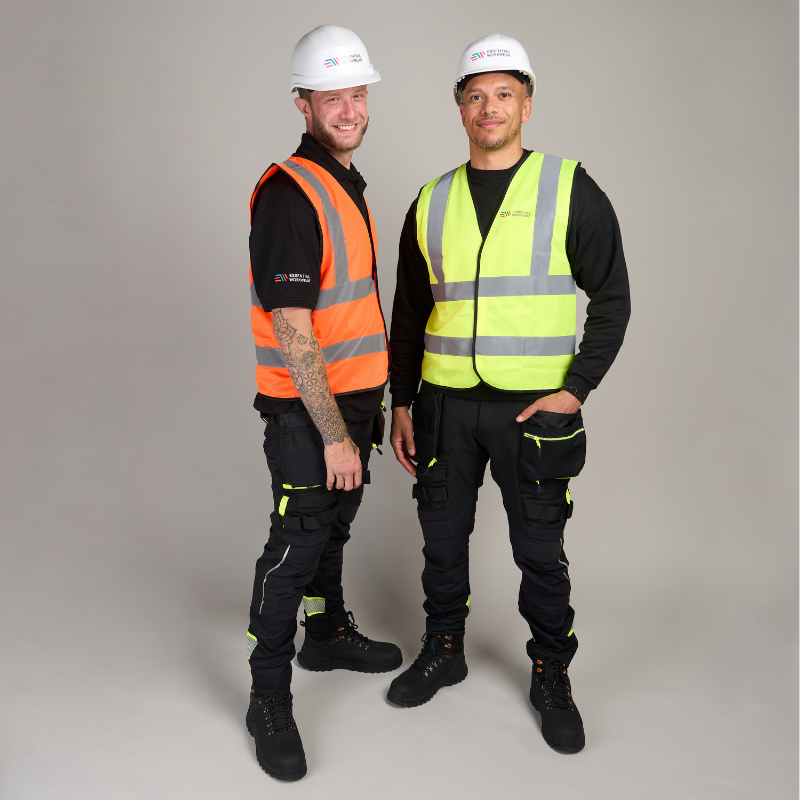
For example, a plain navy polo shirt worn at work would not normally qualify. However, the same polo shirt embroidered with your employer’s logo is much more likely to meet HMRC’s definition of a recognisable uniform.
This is one reason many employers choose branded workwear. It creates a professional appearance and removes much of the uncertainty around whether clothing qualifies as a uniform.
Protective clothing can also qualify
Some specialist protective clothing may qualify for workwear tax relief even if it doesn’t display company branding.
This generally applies to safety gear you can’t do the job without, such as specialist overalls, protective footwear, or industry-specific protective garments you’re responsible for maintaining yourself.
However, it’s important to understand the distinction between qualifying protective clothing and employer-provided PPE, which we’ll cover in the next section.
What Workwear Does Not Qualify?
Everyday clothing does not qualify for workwear tax relief, even if you only wear it for work or bought it specifically for your job.
This is one of the most common areas of confusion. HMRC makes a clear distinction between a genuine work uniform and ordinary clothing that happens to be worn at work.
The following items are unlikely to qualify for tax relief:
- Plain black trousers
- Plain black t-shirts
- White shirts worn in an office
- Business suits
- Smart office clothing
- Plain shoes worn for work
- General clothing with no company branding
Even if your employer requires a particular dress code, the clothing won’t qualify if it could reasonably be worn outside of work.
For example, a receptionist required to wear a black suit cannot normally claim tax relief simply because the suit is only worn during working hours. HMRC considers this everyday clothing rather than a recognisable uniform because you could still wear it elsewhere.
If you’re still unsure whether your workwear qualifies for tax relief, ask yourself, “Would this still look like normal clothing if I removed my job from the equation?”
If the answer is yes, it probably won’t qualify.
What about PPE?
Protective clothing can qualify for workwear tax relief in some circumstances, but there is an important distinction to understand here.
If you purchase and maintain qualifying protective clothing yourself, you are likely to be able to claim tax relief.
However, employers are legally required to provide necessary personal protective equipment (PPE) free of charge. If your employer supplies the branded PPE, there are no costs for you to claim.
| May Qualify | Usually Does Not Qualify |
| Protective overalls you maintain yourself | Employer-provided PPE |
| Safety boots you are responsible for maintaining | Hard hats supplied by your employer |
| Specialist protective garments required for your role | High-vis clothing supplied and maintained by your employer |
| Branded workwear with a company logo | Plain everyday clothing worn at work |
How Much Can You Claim?
Most employees can claim a standard flat-rate allowance of £60 per tax year. However, some occupations qualify for higher HMRC-approved allowances. The amount you actually receive depends on your Income Tax rate.
Rather than reimbursing the exact cost of every wash, repair or replacement, HMRC allows employees to claim a fixed annual amount known as a flat-rate expense allowance.
Workwear tax relief rates at a glance
| Occupation | Flat-Rate Allowance | Basic-Rate Taxpayer (20%) | Higher-Rate Taxpayer (40%) |
| Standard rate (most occupations) | £60 | £12 | £24 |
| Nurses, midwives and healthcare workers | £125 | £25 | £50 |
| Mechanics and motor trade workers | £120 | £24 | £48 |
| Police officers | £140 | £28 | £56 |
| Ambulance staff | £185 | £37 | £74 |
| Firefighters | £80 | £16 | £32 |
| Airline pilots and uniformed flight crew | £1,022 | £204 | £409 |
Figures verified June 2026 against gov.uk and current rebate sources. If an occupation isn’t on HMRC’s list, the £60 standard rate applies.
Example: How the standard allowance works
Let’s say you’re a retail employee who wears a branded company uniform and qualifies for the standard £60 allowance.
You don’t receive £60 back from HMRC. Instead, HMRC gives tax relief on that £60.
- A basic-rate taxpayer (20%) would receive approximately £12
- A higher-rate taxpayer (40%) would receive approximately £24
The same principle applies to occupations with higher allowances. For example, a nurse claiming the £125 healthcare allowance could receive approximately:
- £25 as a basic-rate taxpayer
- £50 as a higher-rate taxpayer
Can you claim more than the flat rate?
If your actual costs are higher than your occupation’s flat-rate allowance, you may be able to claim the exact amount spent in workwear tax relief. However, unlike the flat-rate scheme, you’ll need to give HMRC evidence of the costs incurred:
- Receipts
- Invoices
- Maintenance records
- Other proof of expenditure
The flat-rate allowance is the simplest option because it doesn’t require detailed record keeping. And it’s tough to prove exactly how much you spend on washing a uniform that goes in with your standard laundry every week.
Can you backdate a claim?
You can claim for your current tax year, or for the current year plus up to four previous tax years (five years in total).
So, a basic-rate taxpayer claiming all five years would get roughly £60 (5 × £12), depending on their individual circumstances.
How to Claim Tax Relief on Workwear (Step by Step)
You can claim workwear tax relief directly through HMRC for free. The quickest option is to use HMRC’s online service, although claims can also be made by post using form P87 or by phone.
Step 1: Check that you’re eligible
Before making a claim, confirm that:
- You wear a qualifying uniform or protective clothing
- You pay to wash, repair or replace it yourself
- Your employer does not reimburse those costs
- You paid Income Tax during the years you’re claiming for
You should also check whether your occupation qualifies for a higher flat-rate allowance than the standard £60 rate.
Step 2: Gather your details
You’ll typically need:
- Your National Insurance number
- Your employer’s name
- Your employer’s PAYE reference number (usually found on your payslip or P60)
- Your job title
- The years you’re claiming for
If you’re claiming a flat-rate allowance, you won’t need receipts.
Step 3: Submit your claim
Most employees can claim directly through HMRC’s official employee expenses service.
For official guidance and the latest claim methods, check HMRC’s employee expenses page on GOV.UK.
Step 4: Provide evidence if required
For standard flat-rate claims, HMRC doesn’t ask for receipts. However, if you’re claiming actual expenses that exceed the flat-rate allowance, you’ll need evidence showing what you spent.
This may include:
- Receipts
- Invoices
- Laundry records
- Repair costs
- Replacement purchases
Step 5: Receive your tax relief
Once your claim has been processed, HMRC will normally either:
- Issue a refund for previous tax years you’ve claimed for
- Adjust your tax code so you automatically receive relief in future years
If your tax code is updated, you won’t need to submit a new claim every year unless your circumstances change.
When do you need Form P87?
Form P87 is the name of the form used for employee expense claims, including uniform tax relief.
It’s generally suitable when your claim is £2,500 or less per tax year.
If your allowable expenses exceed this amount, HMRC requires you to claim through a Self Assessment tax return instead.
You can download a P87 from HMRC to print and send by post, or you can use the direct online form to speed up the process.
Avoid paying unnecessary fees
You’ve probably seen tax rebate companies advertise workwear tax refund services that offer to handle claims on your behalf.
While these services seem convenient, they charge a percentage of your refund as a fee. Because claiming directly through HMRC is free, you’ll be able to keep the full amount of any refund by submitting the claim yourself.
The form online is simple and free to use, so think twice before using a service that charges a fee for workwear tax relief claims.
What If You’re Self-Employed?
If you’re self-employed, you cannot use HMRC’s employee uniform tax relief scheme. Instead, you claim allowable clothing expenses through your Self Assessment tax return.
HMRC generally allows claims for:
- Uniforms with a permanent workwear logo
- Specialist protective clothing required for work
- Costumes used for performances or entertainment work
- Repair, cleaning and replacement costs for qualifying items
For example, a self-employed electrician may be able to claim the cost of branded workwear and protective clothing used solely for work.
What self-employed workers cannot usually claim
HMRC takes a strict approach to everyday clothing, even when it’s only worn for business purposes. So, if you’re self-employed, you also can’t claim for:
- Business suits
- Smart office clothing
- Plain shirts and trousers
- Everyday footwear
- Clothing with both personal and business use
These are often referred to as “dual-purpose” clothing expenses, meaning they could be worn outside of work as well as during working hours.
Employee vs self-employed: the simple difference
| Employees | Self-Employed |
| Claim workwear tax relief through HMRC | Claim allowable expenses through Self Assessment |
| Often use flat-rate allowances | Claim actual allowable costs |
| Usually claim through PAYE | Claim through annual tax return |
| May use Form P87 | Use Self Assessment |
Because self-employed expense rules can be more complex, it’s worth checking the latest HMRC guidance or speaking to a qualified accountant if you’re unsure whether a clothing expense is allowable for your small business.
A Note for Employers
While workwear tax relief is aimed at employees, employers also have an important role to play.
Providing branded workwear to your team creates a professional image and makes it clear when clothing qualifies as a genuine work uniform rather than everyday attire.
From a practical perspective, branded uniforms can also reduce confusion around HMRC’s eligibility rules. A branded polo shirt or jacket featuring a company logo is far more likely to meet the definition of a recognisable uniform than unbranded clothing worn as part of a workplace dress code.
Why branded workwear benefits both employers and employees
For employers, branded workwear has a long list of benefits:
- Create a consistent, professional appearance
- Improve brand visibility and customer trust
- Help distinguish staff from customers or visitors
- Support compliance with workplace dress policies
- Remove uncertainty about what constitutes a work uniform
It’s then up to you whether you reimburse cleaning and maintenance directly to eliminate the need for employee workwear tax relief claims.
What if an employer provides the uniform?
If an employer supplies workwear and covers the associated maintenance costs, employees won’t be able to claim workwear tax relief because they haven’t incurred the expense themselves.
The tax relief is designed to compensate employees who personally pay for the upkeep of qualifying work clothing without reimbursement to make sure they’re not left out of pocket for an essential item.
Investing in quality branded workwear
For growing businesses, professionally branded uniforms offer long-term value far beyond tax considerations.
If you’re outfitting a small team or bulk ordering uniforms for multiple locations, investing in durable branded workwear can help create a more professional customer experience while simplifying workplace dress requirements.
Create a corporate account with us today, and we’ll help you streamline your branded workwear needs.
This guide is for general information only and is not financial or tax advice. Always check the latest rules on gov.uk or speak to a qualified accountant.
Frequently Asked Questions
Can you claim tax relief on branded workwear?
Yes, in many cases. If you’re required to wear branded workwear, pay to wash, repair or replace it yourself, and your employer doesn’t reimburse you, you may be eligible for workwear tax relief. The branding helps HMRC identify the clothing as a recognisable work uniform, which makes the process easier.
How long does a workwear tax relief claim take?
Most claims are processed within a few weeks, although timings vary. HMRC may issue a refund for previous tax years and update your tax code for future years. Processing times can be longer during busy periods or if additional information is required from you to support your claim.
Can you claim for washing your work uniform at home?
Yes. HMRC’s flat-rate expense scheme is designed to cover the cost of washing, cleaning, repairing and replacing qualifying work uniforms. Most employees claiming the flat-rate allowance don’t need to calculate their actual laundry costs.
Do I need receipts to claim?
If you’re claiming HMRC’s standard flat-rate allowance for your occupation, receipts are generally not required. However, if you’re claiming actual expenses that exceed the flat-rate amount, you’ll need evidence such as receipts, invoices or other records.
How far back can I claim workwear tax relief?
You can usually claim for the current tax year and the previous four tax years. This means you can backdate a claim and receive a refund covering up to five tax years in total, subject to HMRC’s rules and deadlines.
Is it free to claim directly from HMRC?
Yes. You can submit a workwear tax relief claim directly to HMRC at no cost. While some tax rebate companies offer to handle claims for you, they typically charge a fee or take a percentage of any refund you receive.
Can I claim workwear tax relief if my employer provides the uniform?
Usually not if your employer also covers the maintenance costs. Workwear tax relief is intended for employees who personally pay to clean, repair or replace qualifying work clothing. If your employer reimburses these costs, you generally won’t be able to claim.
What is the standard HMRC uniform allowance?
For most occupations, the standard flat-rate allowance is £60 per year. The actual refund depends on your tax rate. A basic-rate taxpayer (20%) would typically receive around £12 per year, while a higher-rate taxpayer (40%) would receive around £24.