

Categories
How to Brief a Workwear Supplier: Products, Branding & Compliance
To brief a workwear supplier, cover the essentials up front:
- What your team does — so they can recommend suitable garments.
- Products and quantities — the items and rough numbers you need.
- PPE or safety requirements — any standards the garments must meet.
- Branding — your decoration method, logo files and brand colours.
- Deadline — when you need delivery.
A clear brief helps your supplier quote accurately, recommend the right products and flag problems before production.
Ordering branded workwear sounds simple, but kitting out a whole team is where the details matter. You don’t need a finished spec to start, just tell us what your team does and roughly what you’re after, and we’ll help with the rest.
Why a Clear Workwear Supplier Brief Makes All the Difference
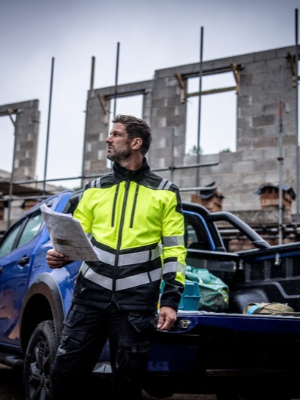
A good brief helps your supplier understand what you need, recommend the right products and give a realistic quote — and lets us spot problems before they get expensive. Logo placement is a common one: stitching through certain waterproof fabrics can affect their performance, so we’d rather flag that early than let you order jackets that won’t do the job.
What our Experts Say:
“One thing we always tell customers is that you don’t need to have everything figured out before you come to us. We’ve had businesses approach us knowing they need uniforms for 50 employees but with no idea which garments would work best. That’s absolutely fine. We’d much rather have that conversation early and help them make the right choices than have them order something that isn’t suitable for the job.” – Louis Georgiou, Operations Director
Start With Your Team, Not the Catalogue
Think about what your employees do all day. Someone outdoors in all weathers needs something very different from a colleague dealing with customers, and if your team needs PPE, your workplace risk assessments should guide those choices from the start. Flag individual requirements early to, maternity workwear, alternative fits or religious clothing needs are far easier to accommodate when we know in advance.
Choosing the Right Workwear Products for Every Role
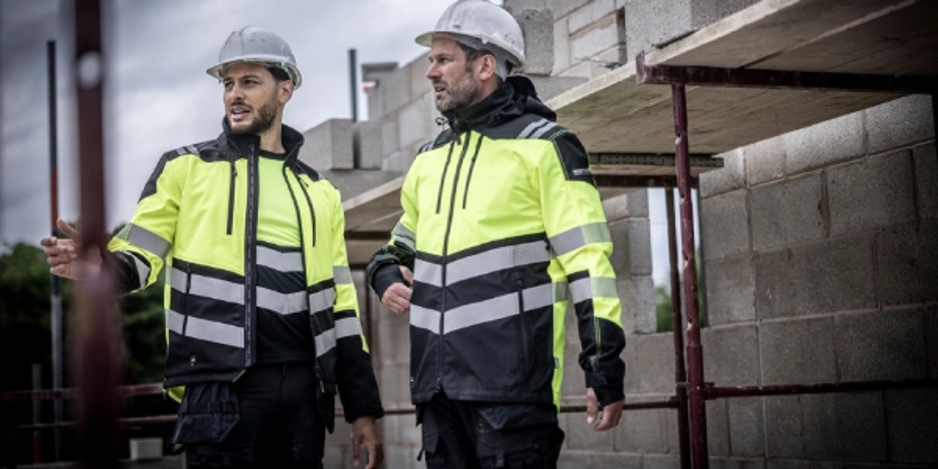
Choosing the right workwear comes down to what your employees need from it. A branded polo shirt might be perfect for customer-facing staff, but it’s not going to be much use to someone spending eight hours a day working outdoors in the rain.
We recommend a mix of garments rather than putting everyone in the same uniform. You can still keep your branding consistent across the team, even when different roles call for different clothing.
Match the Garment to the Job
Here’s a quick guide to the types of workwear worth considering for different roles.
| Role or Environment | Suitable Workwear | Why |
| Customer-facing staff | Polo shirts, softshell jackets | Smart appearance and everyday comfort |
| Warehouse teams | Work trousers, hi-vis where required | Practical clothing for active roles |
| Outdoor workers | Waterproof jackets, fleeces | Protection against changing weather |
| Hospitality staff | Aprons, polo shirts | Comfortable, practical clothing for service roles |
| Cold-weather teams | Insulated jackets, thermal layers | Additional warmth in colder conditions |
If your team moves between indoor and outdoor environments, layering is the way to go. A branded polo shirt with a fleece or softshell jacket gives employees the option to wrap up when it’s cold and remove a layer when they warm up. It’s a practical way to keep everyone comfortable without ordering a completely different uniform for every season.
Case Study: How we helped Brewpoint find the right workwear for different roles
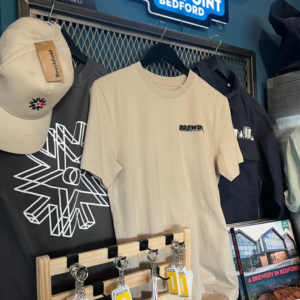
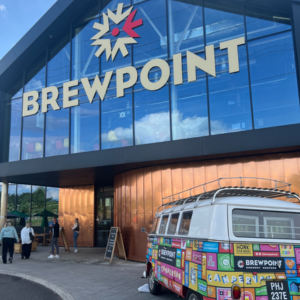
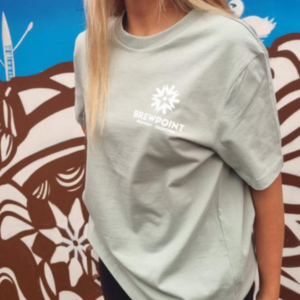
When Brewpoint needed branded workwear for staff across its 12 venues, a one-size-fits-all uniform wasn’t going to work. Their hospitality teams needed comfortable, practical clothing, while their sales staff had different requirements.
We helped them choose breathable polo shirts and durable aprons for their hospitality teams, alongside smart softshell jackets for sales staff. Our artwork team also created branded merchandise, giving Brewpoint a consistent look across its restaurants, taprooms and bars without compromising on what each team needed.
Read the Brewpoint case study.
Consider Fabric Quality and Durability
A polo worn five days a week in a busy warehouse takes far more washing than one worn for occasional client meetings. It’s worth spending a little more on garments that hold their shape, colour and breathability.
Set a Realistic Workwear Budget
Giving a rough budget in your brief helps us recommend workwear clothing that’s actually within your price range. You don’t need an exact figure, but knowing approximately what you can spend per employee is a useful starting point.
Remember to factor in branding costs. Embroidery and printing will affect the final price, especially if you want logos in several positions. We’d also recommend thinking beyond the initial cost. A slightly more expensive garment that lasts twice as long could save you money on replacements.
If you’re still weighing up your options, browse our branded workwear clothing range. We can help you find something that suits your team without stretching your budget.
Deciding on Branding: Embroidery, Screen Print or DTF Transfer
Choosing the right workwear branding method for your workwear supplier brief comes down to the garment you’re using and the design you want to achieve. Embroidery might look fantastic on a polo shirt, but it isn’t always the best option for a large, detailed logo. That’s where screen printing or DTF transfers can be a better choice.
Here’s how the three methods compare:
| Branding Method | Best Suited To | Main Consideration |
| Embroidery | Polo shirts, fleeces and structured garments | Durable, professional finish |
| Screen printing | Larger designs and bulk orders | Cost-effective for suitable designs at higher volumes |
| DTF transfer | Detailed, multi-colour logos | Reproduces intricate artwork on compatible fabrics |
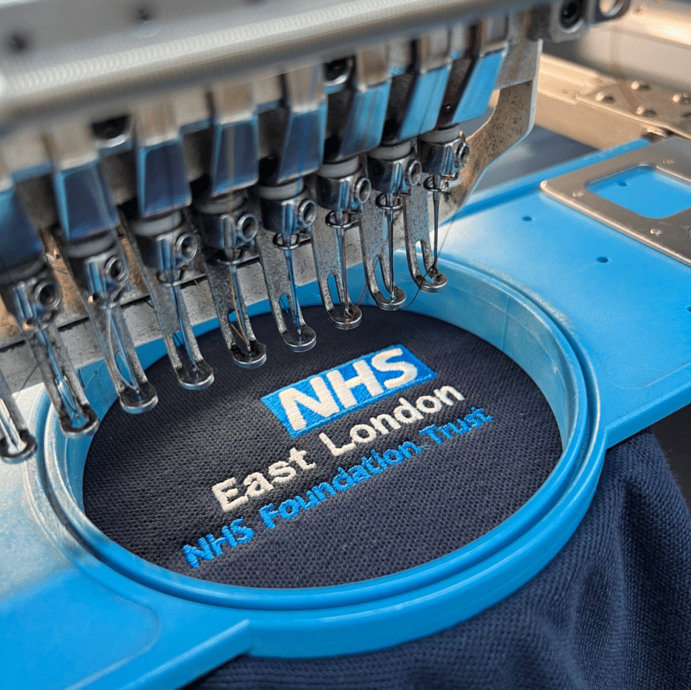
We often recommend embroidery for smaller company logos on polo shirts and jackets. It looks smart and holds up well to regular washing. The downside is that tiny lettering or complicated designs can lose some detail when they’re stitched.
Screen printing is worth considering for larger designs, especially when you’re ordering in bulk. DTF transfers are useful when your logo has lots of colours or fine details that would be difficult to reproduce with embroidery.
If you’re unsure which method to choose, send us your logo and tell us which garments you’re interested in. We’ll help you work out what will look good and hold up to everyday use.
You can also read our embroidery vs printing vs DTF guide for a closer look at each method.
Supplying the Right Artwork Files
For the best results, workwear suppliers need a good-quality version of your company logo. We always recommend sending over a vector file, ideally an .eps, .ai or vector .pdf, because these can be resized without losing quality. An .svg file may also work, depending on the artwork.
What if you only have a JPG or PNG? That’s not a problem when you’re requesting a quote. Send us what you’ve got and we’ll take a look. We may be able to prepare the artwork or redraw your logo if needed, although there could be an additional charge.
For more advice on preparing your files, take a look at our artwork guidelines.
Getting Your Brand Colours Right
If you want your branded workwear to match your company’s colours, try to give our workwear suppliers something more specific than “navy blue”. There are dozens of shades of navy, and what looks right on your website might look quite different when it’s embroidered onto a polo shirt.
If you have brand guidelines, send them over. The most useful colour references include:
- Pantone: Standardised colour references commonly used for printing.
- CMYK: Colour values used in full-colour printing.
- RGB and HEX: Digital colour codes that help us identify the shade you’re aiming for.
- Embroidery thread codes: Used to find the closest available thread colour for your logo.
It’s worth knowing that an embroidered logo won’t always match a printed one perfectly, as thread colours are limited and the fabric underneath affects the finish. No brand guidelines? Send what you have and we’ll show proposed colours on your proof before production.
Choosing Logo Placement and Sizing
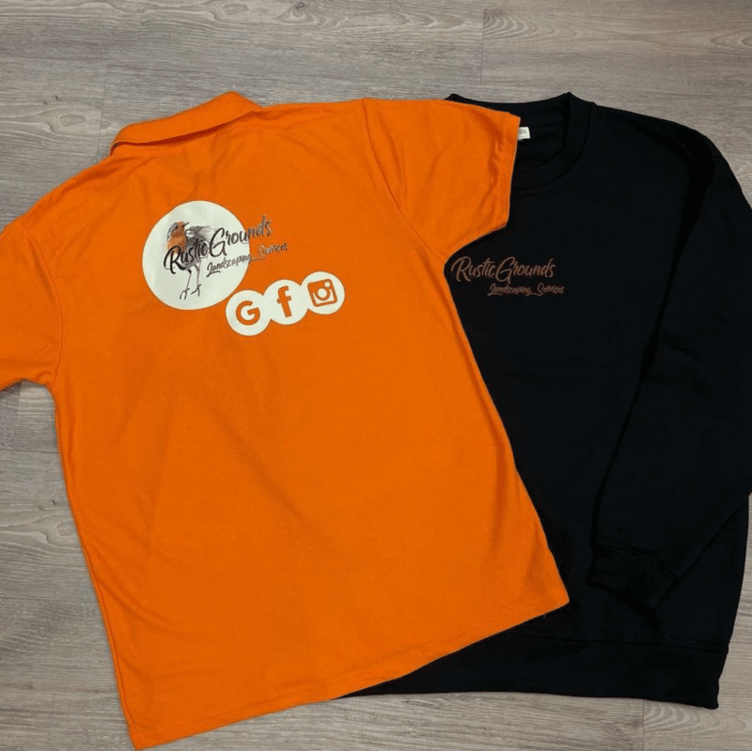
The position and size of your logo makes a big difference to how your branded workwear looks. Left-chest embroidery is a popular choice for a smart, understated finish, but a larger logo across the back of a jacket can also look great across a workforce.
Here are the most common options:
| Logo Placement | Typical Use |
| Left chest | Main company logo, usually around 90–100 mm wide |
| Right chest | Employee names or secondary branding |
| Back yoke | Smaller branding across the upper back |
| Full back | Larger logos for greater visibility |
| Sleeve | Secondary logos or additional identification |
These are just starting points, of course. Every logo is different, and what works for one design might not look quite right for another. Pockets and seams can also get in the way, so we’ll help you find a position that looks good on the garment you’ve chosen.
Hi-vis workwear needs a little more thought. We can’t put logos over reflective tape or cover too much of the fluorescent fabric, as this could affect the garment’s safety rating. We’ll check what’s possible before recommending a position.
If you’re not sure where your logo should go, just ask. We can talk you through the options and help you get the sizing right. There’s also plenty of advice in our workwear logo placement guide.
Building in Safety and Compliance From the Start
If your team needs protective workwear, tell us about the safety requirements straight away. Not every garment can be branded in the same way, and something as simple as adding a logo in the wrong place could affect its protection.
Let us know which safety standards your workwear needs to meet, or what your workplace risk assessment requires. We can then help you choose suitable garments and check which branding options are safe to use.
What Our Experts Say:
“We’ve had customers request large logos across the back of hi-vis jackets without realising how much fluorescent material the design could cover. It’s not simply a case of moving the logo away from the reflective strips. We need to check that the finished garment will still meet its safety classification. Sometimes that means recommending a smaller logo or a different position, but protecting the wearer always comes first.” –Louis Georgiou, Operations Director
Branding Certified Hi-Vis Clothing
When it comes to branding hi-vis clothing, there’s a little less freedom with where your logo can go. Garments certified to EN ISO 20471 need to retain enough fluorescent fabric and reflective tape to meet their safety rating.
Branding Flame-Retardant and Protective Clothing
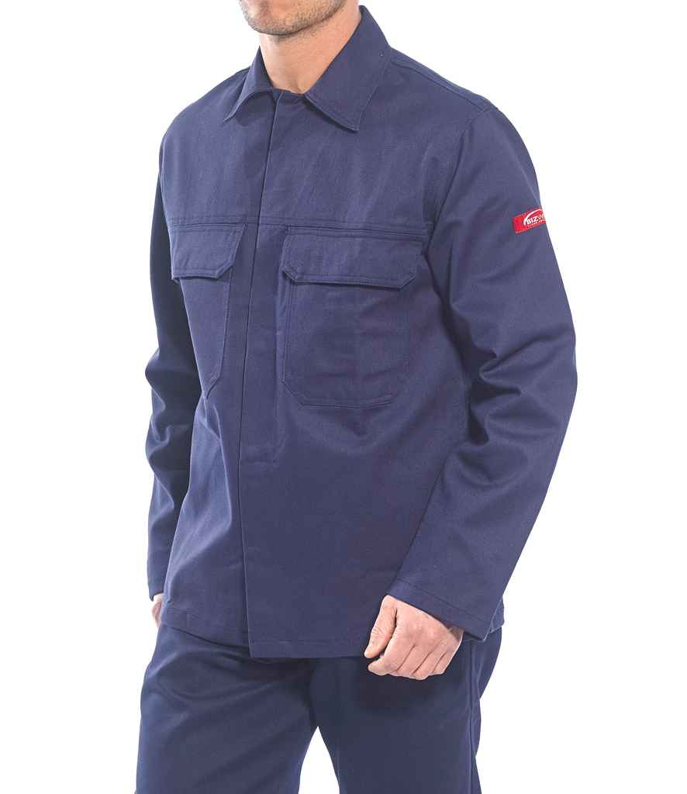
Some protective workwear needs a bit more care when adding logos. Flame-retardant clothing may need specialist threads or print, and embroidering a waterproof jacket could affect its ability to keep the rain out.
Can Safety Footwear and Safety Glasses Be Branded?
We don’t offer branding on safety footwear or safety glasses, as modifying these products could affect the protection they’re designed to provide. That doesn’t mean they have to look out of place with the rest of your team’s uniform, though. We can help you choose suitable products that work well alongside your branded clothing.
Checking PPE Certification
Before adding a logo to any PPE, we need to be confident it won’t affect the protection your team relies on. Both CE and UKCA markings are recognised for applicable PPE in the UK, but that doesn’t mean every branding method is suitable. We’ll check the garment’s requirements and any decoration restrictions before recommending an option, so you can be confident you’re ordering the right workwear for the job.
Approving Proofs and Samples Before Production
Before we start branding your workwear, we’ll send you an artwork proof showing where your logo will sit on the garments and how it will look. Take a few minutes to check everything properly. Once your uniforms have been embroidered or printed, fixing a mistake isn’t quite so straightforward!
What to Check on Your Artwork Proof
Here’s what to look out for:
- Logo size and placement: Is it in the right position, and does it look the right size for the garment?
- Brand colours: Are they as close as possible to your approved colours?
- Spelling: Double-check company names and any personalised details.
- Fine details: Can you read smaller lettering clearly?
- Overall appearance: Are you happy with how everything looks together?
If something doesn’t look right, just let us know. We’d much rather make a change to the proof than have you receive a batch of workwear you’re not completely happy with.
When Should You Request a Physical Sample?
If you’re placing a large order or trying a new style of workwear, we recommend getting a sample first. Product photos are useful, but there’s nothing quite like seeing how a garment fits and feels in person.
A branded sample can also give you a better idea of how your logo will look once it’s embroidered or printed. If you’d like to see a branded sample, let us know and we’ll talk you through the options, including any additional costs.
Once you’re happy with everything, we can get your order into production. You can see what happens next in our workwear order process.
Planning Quantities, Timelines and Reordering
You don’t need an exact breakdown of sizes for your workwear supplier brief. Just let us know roughly how many garments you’re looking for, and we can take it from there. We’ll need the final quantities and sizes before production, but there’s no need to have everything worked out straight away.
We also need to know when you need your workwear and whether you’ll be ordering more in the future. That way, we can help you plan ahead rather than having to rush when new starters join or existing uniforms need replacing.
Case Study: How we managed d&b Solutions’ nationwide uniform rollout
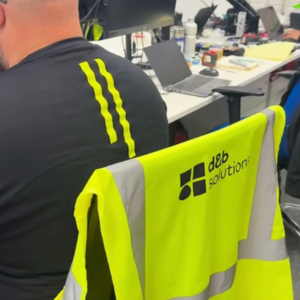
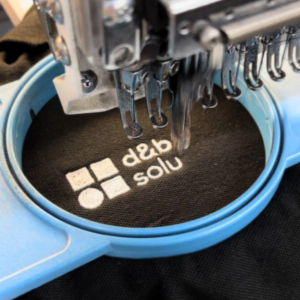
When d&b Solutions rebranded, they needed new uniforms for over 150 employees across the UK. With different departments needing different garments, there was quite a bit to organise. Our team visited with samples so staff could see the options for themselves, and we helped match the workwear to their new brand colours.
We also arranged individual uniform packs for employees and set up a dedicated online ordering portal. This made the initial rollout easier to manage and gave d&b Solutions a much simpler way to order uniforms for new starters.
Read the d&b Solutions case study.
Confirm Accurate Sizes Before Placing Your Order
Once you’re happy with your quote, we’ll need the final garment quantities and sizes before we can get your order into production. We recommend checking sizes with your employees rather than guessing. Workwear sizing can vary between brands, and nobody wants to end up with a uniform that’s too tight or several sizes too big.
We also suggest ordering a few spares if you’re expecting new starters or know you’ll need replacements. Our workwear sizing guide can help you get the sizes right.
Allow Enough Time for Production and Delivery
Branded workwear typically takes around 7–10 working days to produce, although this depends on the garments you’ve chosen and the size of your order.
Artwork approval takes time too, so if you need your uniforms for a particular date, let us know as early as possible. We can talk you through the timescales and confirm what’s realistic before you place your order.
Plan for Multiple Locations and Repeat Orders
Ordering uniforms for several branches? Let us know how you’d like everything delivered. We can discuss whether it’s easier to send the whole order to one location or arrange separate deliveries.
For larger teams, our Uniform Manpacking organises garments into individual employee packs, saving you the job of sorting through boxes and distributing uniforms yourself.
If you’ll be ordering regularly, our corporate accounts and ordering portal makes life easier too. With your chosen garments and branding already agreed, getting uniforms for new starters or replacing worn-out items becomes much more straightforward.
Common Workwear Supplier Briefing Mistakes to Avoid
We’ve helped plenty of businesses organise workwear supplier briefs, and it’s the little details that cause the biggest headaches. The good news is that most problems are easy to avoid if you catch them early.
Here are a few things we’d recommend watching out for:
- Choosing on looks alone — will it keep your team comfortable all shift?
- Sending a blurry logo — vector is best; if you don’t have it, send what you’ve got.
- Guessing brand colours — Pantone or brand guidelines get a closer match.
- Assuming every garment can be branded — protective fabrics have restrictions.
- Approving artwork too quickly — check spelling and placement before branding starts.
- Ordering at the last minute — give as much notice as you can.
- Guessing final sizes — rough numbers suit a quote; we need accurate sizes for production.
- Forgetting delivery arrangements — tell us early if you need multiple branches or individual packs.
Your Workwear Supplier Brief Checklist
Ready to get your workwear quote? Here’s a handy checklist of what to tell us so we can recommend the right garments and put together an accurate quote.
For your initial enquiry:
- Your business name and contact details
- What your employees do and where they work
- The types of workwear you’re interested in
- Any PPE or safety requirements
- Roughly how many garments you’ll need
- Your approximate budget, if you have one
- Your company logo and brand colours, if available
- Where you’d like your logo positioned
- When and where you need your order delivered
- Any special requirements, such as deliveries to different branches
Before we start production:
- Final garment choices and quantities
- Confirmed sizes for your employees
- Agreed branding method and approved artwork
- Signed-off proofs or samples, where needed
- Confirmed delivery details
Don’t worry if you can’t tick every box just yet. You don’t need exact sizes or perfect artwork to ask us for a quote. Tell us what you know, and we’ll help you work through the rest.
For a little more guidance, have a look at our Workwear Quote Checklist.
Shop Personalised Workwear at Essential Workwear
Whether you need a few branded polos or uniforms for teams across multiple sites, we’ll help you get the details right. Browse our personalised workwear range or give our friendly team a call on 0330 822 8276.
Frequently Asked Questions About Briefing a Workwear Supplier
What file format do I need for an embroidered logo?
We recommend sending your logo as a vector file, ideally an .eps, .ai or vector .pdf. These give us clear artwork to work from when preparing your design for embroidery. Don’t worry if you’re unsure which file you have, we can take a look for your workwear supplier brief.
What if I only have a JPG of my logo?
That’s fine for an initial workwear quote. Send us your JPG or PNG and we’ll see whether it’s suitable. If the quality isn’t quite good enough, we may be able to redraw your logo or prepare it for branding, although there could be an additional charge.
How big should a logo be on a polo shirt?
For a left-chest logo, around 90–100 mm wide is a common starting point. It really depends on the shape of your logo, though. We’ll help you choose a size that looks right on the polo shirt and show you the proposed placement on your artwork proof.
Can you print on hi-vis clothing?
Yes, we can print on suitable hi-vis garments, but we need to check the branding area first. Your logo can’t cover reflective tape or reduce the fluorescent material below what’s required under EN ISO 20471. We’ll check the garment’s requirements before confirming what’s possible.
Do I need to know everyone’s sizes before requesting a workwear quote?
No, you don’t need everyone’s sizes to get started. Just tell us roughly how many garments you’re looking for, and we can put together a quote. We’ll ask you to confirm the exact sizes and quantities before your order goes into production.
What is the minimum order quantity for branded workwear?
It depends on the garments and branding method you’re interested in. If you only need a small number of uniforms, it’s still worth getting in touch. Tell us what you’re looking for, and we’ll explain the ordering options available.