

Categories
Steel Toe Cap vs Composite Toe Cap: Which Is Better For Your Job?
Steel toe caps and composite toe caps offer the exact same level of protection, as both meet the EN ISO 20345:2022 safety standard. The real difference comes down to everyday trade-offs:
- Steel toe caps: More budget-friendly with a slimmer, lower-profile fit.
- Composite toe caps: Lighter for long shifts, non-metallic for security scanners, and better at insulating against extreme heat and cold.
We’ll talk you through the key differences and explain where each type works best, so you can choose the right safety boots for yourself and your team.
What Does a Safety Toe Cap Do?
A safety toe cap is a protective shell built into the front of a safety boot or shoe to shield your toes from falling objects and crushing injuries. There are two main types you’ll come across:
- Steel toe caps: The traditional option, made from heavy-duty steel. They’re strong and have a slimmer profile, which keeps the front of the boot less bulky and explains why they remain so popular.
- Composite toe caps: Made from non-metallic materials such as fibreglass, carbon fibre, or reinforced plastic. Because they’re lighter than steel, they help reduce foot fatigue over long shifts.
Under EN ISO 20345:2022, both steel and composite toe cap boots must pass the exact same protection tests:
- 200-joule impact resistance: Roughly equivalent to dropping a 20 kg weight from a height of one metre.
- 15 kN compression resistance: Protects against heavy crushing or rolling forces.
That’s a serious amount of force for a small part of your boots or trainers to withstand. You’ll find both options in our range of safety footwear, giving you plenty of choice whichever material you prefer.
Composite Toe Boots vs Steel Toe: The Key Differences
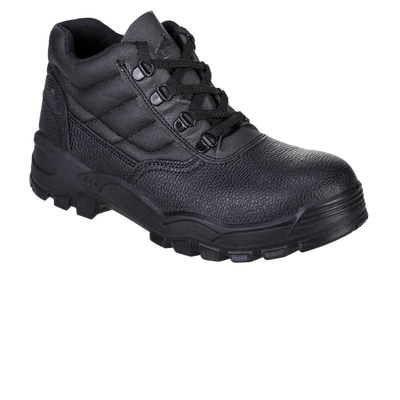
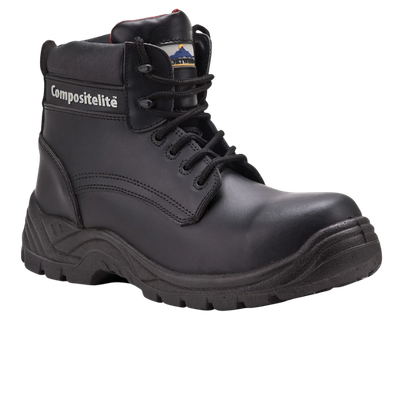
Steel toe caps are generally heavier and more affordable, with a slimmer profile that takes up less room inside the boot. Composite toe caps are typically lighter and transfer less heat and cold.
Here’s how they compare:
| Feature | Steel Toe Caps | Composite Toe Caps |
| Weight | Heavier | Lighter |
| Toe area | Slimmer | Slightly bulkier |
| Price | More affordable | More expensive |
| Hot and cold conditions | Conduct heat and cold more readily | Transfer less heat and cold |
| Metal detectors | Can trigger security scanners | Non-metallic toe cap won’t trigger scanners |
| Safety standard | EN ISO 20345:2022 | EN ISO 20345:2022 |
| Impact protection | 200 joules | 200 joules |
| Compression resistance | 15 kN | 15 kN |
It’s easy to look at that table and assume composite safety boots are the obvious choice if you’re on your feet all day. And for some workers, the weight difference is worth paying a little extra for. However, we encourage you to look at the whole boot before making a decision. The sole and other materials contribute to its overall weight, and a well-fitting steel toe boot can be far more comfortable than a composite shoe that pinches your feet.
From Our Workwear Experts:
“We always say to customers, don’t get too caught up in whether a boot has a steel or composite toe cap. Think about what your team actually does all day. If you’ve got warehouse staff walking miles every shift, a lighter boot could make a real difference. But if they’re happy in steel toe boots that fit well and do the job, there’s no reason to spend more just for the sake of it.” – Louis Georgiou, Operations Director
Are Composite Toe Caps as Safe as Steel?
Certified composite toe caps are just as safe as steel toe caps. Both are required to meet the same impact and compression standards under EN ISO 20345:2022. Composite safety boots might feel lighter and look less substantial than steel, but that doesn’t mean you’re getting less protection.
We’ve already touched on the 200-joule impact requirement, but safety toe caps must also withstand 15 kN of compression, which is equivalent to around 1.5 tonnes-force. During testing, there must still be enough clearance inside the toe cap to protect your toes from being crushed, even under that pressure.
Of course, toe protection is only one part of choosing safe footwear. If you’re working on a building site where there’s a risk of stepping on nails or other sharp objects, you’ll also need penetration resistance. That’s where the boot’s full EN ISO 20345:2022 classification, such as S1, S2 or S3, comes into play.
When Should You Choose Steel Toe Caps?
Choose steel toe caps when you’re buying for a team on a budget, want a slimmer toe profile, or need a wider choice of styles. They’ve been a staple of workplace safety for decades, and for many roles there’s little benefit in paying extra for composite.
We’d recommend steel toe caps if:
- You’re buying for a team: When you’re ordering 20 or 30 pairs of safety boots, steel is the more economical option, without compromising on certified toe protection.
- You prefer a slimmer fit: Steel toe caps take up less room than composite versions, so they’re not as bulky.
- You want a wider choice of styles: We have a wide range of steel toe cap safety boots and shoes, so you’ve got plenty of options to suit different jobs.
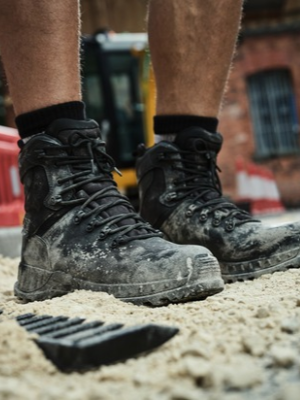
You’ll find steel toe footwear used across construction sites and engineering workshops, where workers need protection from heavy objects and equipment. For many of these roles, a good pair of steel toe boots will do the job perfectly well, and there’s little benefit in paying extra for composite safety boots.
Take a look at our steel toe safety boots and shoes to find the perfect fit for your team.
When Should You Choose Composite Toe Caps?
Composite toe caps are the better choice when you spend most of your shift on your feet, work in cold weather, or have to pass through security scanners like those in prisons or airports. They can make your work day a little more comfortable if you’ve found traditional steel toe footwear heavy or restrictive.
There are a few situations where we’d recommend looking at composite toe caps over steel alternatives:
- You’re covering a lot of ground: If you work in a large warehouse and spend hours walking between picking locations, composite toe caps help reduce the weight to make long shifts a little easier.
- You’re working in the cold: Steel conducts cold more readily, which isn’t ideal when you’re spending your shift in a chilled warehouse. Composite caps reduce that transfer, but you’ll still want properly insulated boots if you’re working in freezer conditions.
- You’re going through security regularly: Nobody wants to be taking their boots off every time they go through a metal detector. Composite toe caps are non-metallic, so they’re popular with airport workers and staff at secure facilities. Just check that the rest of the boot is metal-free too, as some styles still contain steel components.
A non-metallic toe cap doesn’t mean a boot is safe for electrical work. If your job involves electrical hazards, you’ll need footwear with the appropriate protective properties for those risks.
Browse our composite safety boots and shoes to see the difference in fit and profile.
Steel Toe vs Composite Safety Boots: Which Is Better For Your Job?
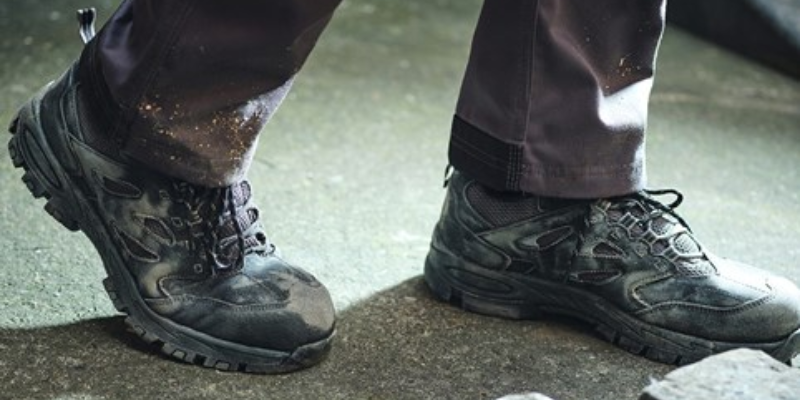
Steel toe shoes are a practical, affordable choice for construction and engineering work. Composite safety boots are better suited to warehouse workers who spend long shifts walking or those working in cold environments. Both provide certified toe protection, so the right choice depends on your workplace hazards and the demands of your job.
Here’s what we’d recommend for different roles:
| Job or Working Environment | Our Recommendation | Why? |
| Construction workers | Either | Both offer certified toe protection. Steel is often more affordable, but check the full footwear rating for site hazards. |
| Warehouse workers | Often composite shoes | Lighter toe caps can be useful when you’re walking long distances throughout a shift. |
| Cold-store workers | Composite shoes | Transfers less cold to your toes, although you’ll still need suitable thermal insulation. |
| Airport and security staff | Fully metal-free composite footwear | Useful when passing through metal detectors regularly. |
| Engineers and factory workers | Either | Choose based on the hazards involved, required protection and personal fit. |
| Electrical workers | Specialist electrically protective footwear | Toe cap material alone doesn’t determine electrical safety. |
If you’re ordering safety footwear for a whole team, think about how different their working days can be. In a warehouse, your picking staff will spend most of their shift walking between aisles, while colleagues working at a packing station might spend more time standing in one place. Even within the same building, their footwear needs will be quite different.
We see this as a good reason to give workers some choice once you’ve established the safety requirements for their roles. There’s little point ordering everyone the same boots if half the team finds them uncomfortable by lunchtime.
Finding the Right Safety Footwear at Essential Workwear
Choosing between steel and composite toe caps comes down to finding footwear that meets your site’s safety requirements and feels comfortable throughout the working day.
At Essential Workwear, we’ve got plenty of options to suit different jobs and budgets. Browse our range of safety footwear to compare steel and composite styles, or take a look at our waterproof safety footwear if your team spends a lot of time working outdoors.
If you’re ordering for a whole workforce and aren’t sure which footwear would work best, get in touch with our team. We’re always happy to talk through your requirements and help you find something that works for everyone!
Frequently Asked Questions About Steel and Composite Toe Caps
Do steel toe caps set off metal detectors?
Yes, steel toe caps can set off metal detectors since they’re made of metal. Composite toe caps won’t trigger detectors themselves, although you’ll need to check that the rest of the boot is metal-free too
Are composite toe boots warmer in winter?
Composite toe boots can feel warmer in winter because the toe caps don’t transfer cold as readily as steel. However, if you’re working outdoors in freezing temperatures or spending hours in a cold store, we’d recommend looking for boots with proper thermal insulation rather than relying on the toe cap alone.
Are composite toe caps as strong as steel toe caps?
Yes, certified composite toe caps must meet the same impact and compression requirements as steel under EN ISO 20345:2022. Both are tested against a 200-joule impact and 15 kN of compression, so you can choose either material with confidence, provided the footwear meets your workplace’s safety requirements.
Are composite toe cap boots completely metal-free?
No, not all composite toe cap boots are completely metal-free. Some still have metal eyelets or steel penetration-resistant inserts. If you need to pass through security scanners regularly, check the manufacturer’s specifications for a fully metal-free design before ordering.
Should safety boots be replaced after a heavy impact?
Yes, we recommend taking safety boots out of use after a heavy impact, even if they look undamaged. Steel toe caps can bend, and composite toe caps can develop cracks that aren’t immediately obvious. If there’s any doubt about whether the protection is still effective, replace the boots rather than risk wearing damaged footwear.
How often should you replace safety boots?
It depends on how often you wear them and the conditions they’re exposed to. We recommend checking them every time they’re worn for worn soles or damaged uppers, and following the manufacturer’s guidance. If they’re showing signs of damage that could affect their protective performance, it’s time for a replacement pair.