

Categories
Stitch Count and Embroidery Pricing Explained
Embroidery pricing is largely driven by stitch count, or the total number of stitches needed to sew your logo into a garment. More stitches mean more machine time, more thread, and more labour, which increases the cost per embroidered logo.
A standard left-chest logo uses 6,000–10,000 stitches and typically costs around £3 – £6 per garment, plus a one-off digitising fee of around £15 if it is a new logo.
But stitch count is only part of the picture.
Things like logo complexity, stitch density, thread colour changes, garment type, placement, and even how the design is digitised can all affect the cost of the logo.
In this guide, we will use our 28 years of embroidery experience to break down exactly how embroidery pricing works, what stitch count actually means, and the questions you should ask before comparing quotes.
What is Embroidery Stitch Count?
Every embroidered logo is made up of thousands of individual stitches, sewn into the fabric by an embroidery machine. The total number of those stitches is known as the stitch count and before we can calculate it, your logo first needs to be digitised (more on that in our logo embroidery file guide).
Stitch count directly affects how long it takes to produce your logo. The higher the count, the longer the machine runs, and the more it costs per logo. That said, two logos that look almost identical in size (as seen below) can have very different stitch counts, because it’s not just about dimensions.
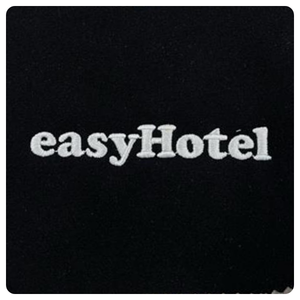
Stitch Count: 2.4k
Width: 90mm
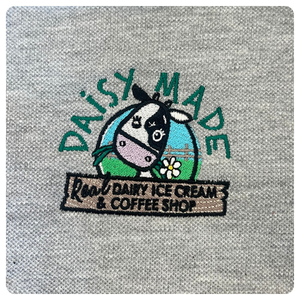
Stitch Count: 14.4k
Width: 80mm
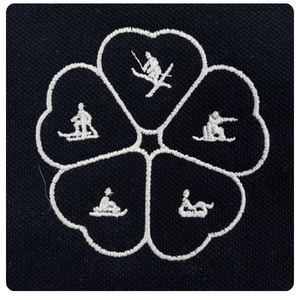
Stitch Count: 5k
Width: 80mm
Embroidery software measures every needle movement and needle-down point as part of the stitch count. That includes visible stitches, underlay stitches hidden beneath the design, trims, tie-ins, and direction changes. So, even two logos that look similar in size can have completely different embroidery stitch counts depending on how they’re digitised.
One of the biggest misconceptions around embroidery pricing is that logos are priced purely by size. In reality, embroidery stitch count is affected far more by detail, fill coverage, density, and complexity than physical dimensions alone. As a rough rule, a clean, simple logo with bold shapes and limited colours will embroider more efficiently than a highly detailed design filled with gradients, textures, and small elements.
Here’s a stitch count guide along with some photo examples to give you a better idea of what this looks like, and the typical stitch counts of different types of logos.
| Logo Type | Typical Stitch Count | Notes |
| Small text-only logo | 2,000–5,000 stitches | Wordmarks, simple lettering |
| Standard left-chest logo | 5,000–10,000 stitches | Text plus simple icon — the everyday workwear logo |
| Detailed illustrated logo or Crest style logo | 10,000–20,000 stitches | Multiple colours, fine detail, gradients |
| Detailed back logo | 20,000–60,000+ stitches | Large coverage area |
| Photorealistic embroidery | 40,000+ stitches | Rarely a good fit — usually better as DTF |

Small text-only logo 2-5k
Width: 120mm
Stitch Count: 3.7k

Standard left-chest logo 5-10k
Width: 80mm
Stitch Count: 7.5k
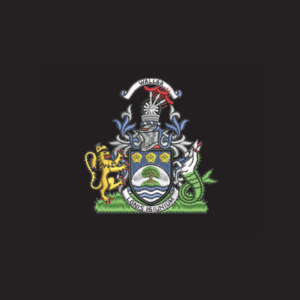
Detailed illustrated/Crest Logo 10-20k
Width: 80mm
Stitch Count: 16.8k

Detailed Back Logo 20-60k
Width: 180mm
Stitch Count: 47k
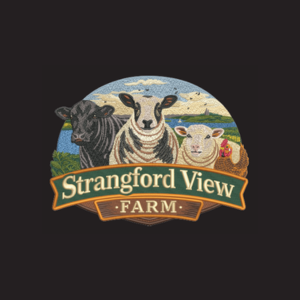
Photorealistic Embroidery 40k+
Width: 220mm
Stitch Count: 97.5k
Many of our clients go for the standard embroidered company logo on the left chest of a workwear polo shirt. That usually falls somewhere between 6,000 and 10,000 stitches, depending on the amount of detail, colour changes, and filled areas within the design.
This is also why embroidery pricing can feel confusing for first-time buyers. A logo with a lot of detail, large solid colour sections, gradients, or multiple outlines will dramatically increase embroidery stitch count without looking significantly bigger on the garment.
But it’s also important to remember that embroidery stitch count cost isn’t just about size, it’s about complexity. A clean, well-designed logo often embroiders more efficiently than an overly detailed design packed with small elements that don’t translate well into thread.
Very large or highly detailed designs can quickly become inefficient for embroidery. Many of our clients achieve a cleaner result by combining embroidery with other branding methods depending on the garment and artwork involved. If you’re comparing embroidery with alternatives like print or transfer methods for larger designs, it’s worth understanding how branding methods compare before making a final decision. If you’re weighing up your options, our guide to embroidery vs screen print vs DTF print is a good starting point.
How embroidery pricing actually works
Because our Barudan machines run at a consistent speed (approximately 700 to 1,000 stitches per minute per head, depending on fabric and design complexity), pricing is closely tied to production time. A higher stitch count simply means the machine runs longer, which increases the cost per garment.
For example, a standard 8,000-stitch left-chest logo takes around 6–8 minutes per garment once trims, colour changes, and finishing are factored in.
The quality of the digitising process has a major effect on the finished embroidery result, which is why the file format used for embroidery matters far more than many of our clients realise.
To keep things simple for our clients, we offer a flat price for logos up to 10,000 stitches this is calculated . Anything above that is quoted individually based on the complexity of the artwork. You can see our transparent pricing on our print & embroidery pricing page.
What Else Affects Embroidery Pricing?
Stitch count is the biggest driver behind embroidery pricing, but it’s not the only thing affecting the final quote we give clients. Two logos with the exact same embroidery stitch count can still cost different amounts to produce depending on the garment, placement, colours, and how the design is prepared for embroidery.
Specialty threads, metallic finishes, or high-coverage fills can increase costs further because they usually require slower machine speeds and more careful handling during production.
Operator Time
Embroidery isn’t completely automated once the logo file is loaded. Each garment still needs to be hooped correctly, framed onto the machine, monitored during stitching, removed afterwards, trimmed, checked for quality, and packed by a team of experts.
This is why we can offer discounts on our embroidery prices at high volumes. The fixed setup and operator time gets spread across more items, making the overall production run more efficient and reducing the per-unit cost.
Thread Colour Changes
Every time the embroidery machine changes thread colour, production slows down slightly.
On our 8-head embroidery machines, the machine rotates to another pre-threaded needle rather than manually re-threading each time, but it still adds extra movement and machine time. So, a simple one-colour logo will run faster and more efficiently than a design using five or six colour changes throughout the stitch sequence.
Order Quantity
Embroidery becomes more cost-effective at higher volumes because the setup time is spread across more garments.
Our machines still need to be prepared, the logo file loaded, thread colours assigned, and the garments hooped regardless of whether you order five items or fifty. But larger orders simply make production more efficient overall, which is why we can offer discounts on bulk orders.
Embroidery Digitising Fees
Before a logo can be embroidered, it has to be converted into a machine-readable embroidery file.
Stitch Density: The Hidden Difference Between Quotes
Stitch density refers to how tightly packed the stitches are within filled areas of the logo. Higher-density embroidery creates a more solid, premium-looking finish, but it also increases stitch count and machine time. Lower-density embroidery uses fewer stitches and produces cheaper quotes, although the logo may appear thinner, less durable, or allow the garment fabric to show through over time.
This is one of the biggest hidden differences between cheap embroidery pricing and higher-quality production. If you’re getting a suspiciously low quote from a supplier, it’s probably because they’re using a low stitch density to save on costs.
On paper, the logo will sound comparable. In reality, the finished embroidery often looks thinner, less defined, and much less durable after repeated washing.
Below is an example of an embroidered logo with a good stitch density and the same logo done again with a lower stitch density.
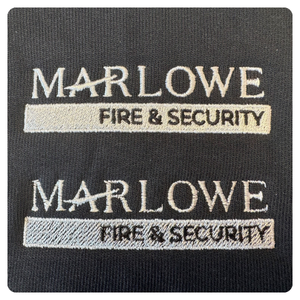
You can usually spot low-density embroidery by looking closely at filled areas of the logo. If the garment fabric is visibly showing through the thread (especially around curves, blocks of colour, or larger stitched sections) the density has been reduced to save stitches and money.
Missing or weak underlay stitches make the problem even worse. Without proper underlay stabilising the fabric underneath, the top stitches can sink, pull unevenly, or puff up over time. The logo may look okay when it first arrives, but after regular wear and washing, the difference becomes obvious very quickly.
This is why you really can’t compare embroidery quotes purely on price. Two suppliers might both quote for a “standard left chest logo,” but if one is running significantly lower stitch density or skipping proper underlay, they are not actually producing the same level of embroidery quality. The only reliable way to compare embroidery stitch count cost like-for-like is to understand the stitch count and production quality behind the quote.
What We Do Differently
At Essential Workwear, we set stitch density based on the garment fabric and the durability the logo needs, not simply to hit the cheapest possible price point. We also use proper underlay stitching on every embroidered logo to improve definition, stability, and long-term wear. We are happy to provide pre-production swatches on request if you want to review the stitched result before a larger run goes ahead. And we’re confident you’ll be happy with the quality.
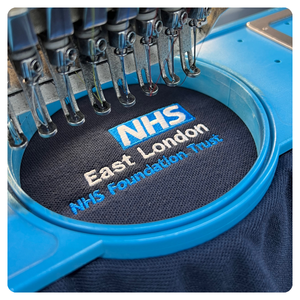
Case Study: The Math Behind Embroidery Stitch Count Cost
Let’s look at an example from one of our clients of how embroidery pricing works in practice.
A small business owner came to us needing embroidered polos for a 25-person trade team. The logo was a standard left chest design with text and a small icon, coming in at roughly 8,000 stitches. Because it was a brand-new logo, it also needed to be digitised before production could begin.
The first cost is the one-off embroidery digitising fee.
Here at Essential Workwear, the setup fee is £15 per new logo or FOC for orders above £150. Once the logo has been digitised, the file can be reused on future orders without any additional setup charge, saving our clients money on repeat orders in the future. In this case the set up cost would be free because the total order of 25 poloshirts will be above £150.
The embroidery itself is then priced per garment.
An order of 25 garments falls into the 25–49 price band, which is £4.00 per embroidered logo per item.
Here’s the breakdown:
| Cost Element | Price |
| One-off embroidery digitising fee | FOC |
| 25 embroidered logos at £4 each | £100 |
| Total embroidery cost | £115 |
That £100 covers the embroidery only, and the garments themselves are priced separately. In this example, our customer chose our Essential Workwear Premium Polo Shirts, saving 15% by bulk ordering 25.
Now let’s run the exact same logo at a higher quantity to see how the math would’ve worked for a larger team.
If the customer ordered 50 garments instead, the price per logo drops to £3.75 each because the order moves into the 50+ pricing tier.
| Cost Element | Price |
| One-off embroidery digitising fee | FOC |
| 50 embroidered logos at £3.75 each | £187.50 |
| Total embroidery cost | £187.50 |
The overall order value increases because there are more garments being embroidered, but the cost per item becomes lower because the setup and machine time are spread more efficiently across the run.
They also would’ve got a 20% discount on the branded polos for a higher bulk order. That’s why embroidery pricing always becomes more cost-effective at volume.
Want to look at branding pricing in more detail? Have a read of our Logo Branding Pricing guide.
Where Buyers Get Caught Out on Embroidery Costs
Next time you get two wildly different quotes from embroidered workwear suppliers, here’s what to look at to figure out where the differences are coming from.
Hidden Stitch Counts
One of the biggest problems is that many suppliers never tell the customer the stitch embroidery count they’ve quoted cost against.
Without that information, it’s almost impossible to compare embroidery pricing accurately. A quote for an 8,000-stitch logo is not directly comparable to one that’s been digitised down to 5,000 stitches to reduce machine time.
Always ask what stitch count the quote is based on and if a supplier can’t tell you, that’s worth noting.
Frequently Asked Questions About Embroidery Pricing
How is embroidery priced?
Embroidery is usually priced based on stitch count, logo complexity, placement, and order quantity. More stitches mean more machine time, which increases the embroidery price per garment.
What is stitch count in embroidery?
Stitch count is the total number of stitches used to create an embroidered design. Every stitch within the logo contributes to the final count, including underlay and fill stitches.
Why do embroidery quotes vary so much?
Embroidery quotes vary because suppliers may use different stitch counts, stitch densities, digitising methods, and production standards. Lower quotes are often achieved by reducing stitch density or simplifying the embroidery file, which impacts quality.
What is an embroidery digitising fee?
An embroidery digitising fee covers the process of converting your logo into a machine-readable embroidery file. This is usually a one-off setup charge for new artwork.
What file format is best for logo embroidery?
Vector files such as AI, EPS, or high-quality PDFs usually produce the best embroidery results because they can be scaled cleanly during digitising, but JPEGs & PNGs work as well. If you’re unsure, here’s more information on the file format used for embroidery.
Is embroidery more durable than printing?
In most cases, yes. Embroidery is stitched directly into the garment, making it highly durable for workwear and repeated washing. However, durability still depends on proper digitising, stitch density, and production quality.
Looking for a Reliable Embroidery Stitch Count Cost Quote?
The best embroidery results come from balancing efficiency with durability—creating a logo that looks sharp on day one and still holds up after months of heavy wear and washing.
At Essential Workwear, we take the time to digitise logos properly, match stitch settings to the garment fabric, and produce embroidery designed for real-world workwear use that our clients can rely on.
Whether you need a small run of embroidered polos or ongoing uniform supply for a larger team, you can contact us to request a quote and we’ll help you choose the most suitable branding option for your garments, logo, and budget!